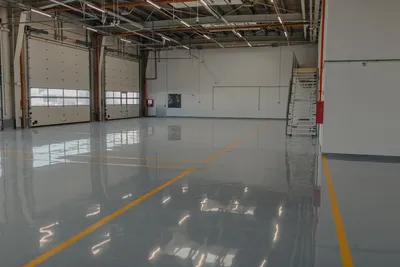
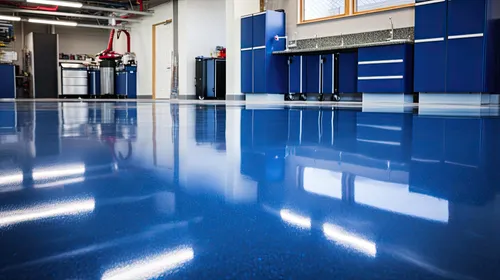
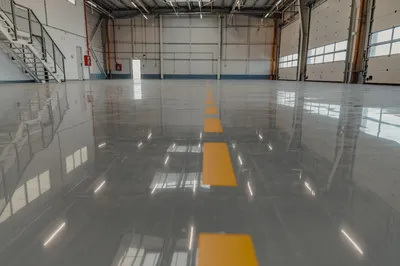
Warehouse Floor Coatings in Princeton, NJ
Route 1 warehouse and distribution facilities near Princeton range from small last-mile fulfillment centers to multi-bay distribution operations serving the broader Mercer County region. These floors take daily forklift traffic, pallet jack loads, and the wear of dock operations. We install industrial systems matched to the actual traffic and chemistry, not residential products scaled up.
What Route 1 Warehouse Floors Need Before Coating
Industrial warehouse floors have specific load, chemistry, and scheduling requirements that determine the right system.
Light electric pallet jacks and heavy pneumatic-tire forklifts create very different loads. We classify your traffic and spec the right system thickness and topcoat for the actual use.
Warehouse concrete takes the most damage at dock doors, turning radii, and column bases. We repair damaged joints and spalled areas before coating so the floor system is applied over stable, solid concrete.
Warehouse floors deal with forklift battery acid, cleaning solvents, and a range of spills. We match the system chemistry to your most aggressive regular chemical exposure.
Most Route 1 warehouse operations cannot shut down completely. We section the floor and coordinate zone-by-zone installation around your shipping and receiving schedule.
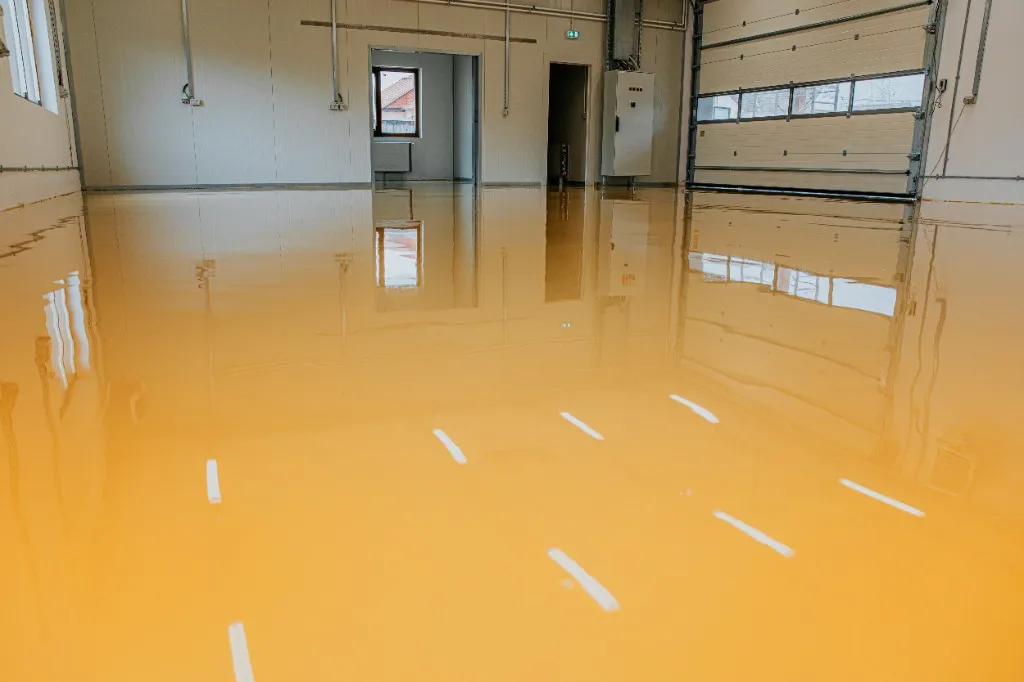
We discuss OSHA aisle width requirements and safety zone needs during the facility walk. Striping is integrated into the floor system, not painted on after cure.
Warehouse Flooring on the Princeton Route 1 Corridor
The Route 1 corridor through the Princeton area supports a range of warehouse and distribution operations, from smaller e-commerce fulfillment centers in Forrestal Village to larger distribution facilities south toward Hamilton. These operations have floors that deal with forklift traffic, pallet jacks, heavy rolling loads, and the wear of daily receiving and shipping operations. Standard commercial epoxy is not an appropriate system for most of them.
We spec warehouse systems based on traffic type and intensity. Light forklift use over a clean concrete slab is different from a receiving dock with impact-damaged joints, chemical spills from cleaning compounds, and tire marks from high-speed electric pallet jacks. We visit, walk the traffic patterns, identify the high-impact zones, and specify accordingly.
For Princeton-area warehouse facilities that cannot shut down for floor work, phased installation is standard. We section the floor into zones, keep receiving and shipping aisles operational, and hand off zones one at a time with specific return-to-service times. Aisle striping and safety markings are applied as part of the topcoat phase so they are fully integrated into the floor system.
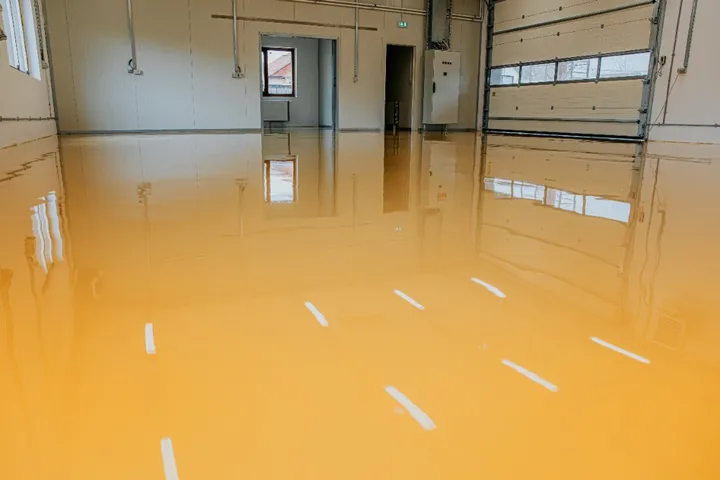
Every project follows the same proven steps, from free estimate to final walkthrough.
Your floor backed for life. In Writing. If the coating bond ever fails, peels, or delaminates, we come back and make it right: materials and labor, at no cost to you.
What Princeton-Area Warehouses Get
Key Benefits
- System specified for actual forklift traffic class and chemistry
- Joint and spall repair in high-impact zones as part of the prep scope
- Phased installation to keep warehouse operations running
- Integrated aisle striping and safety markings
- Chemical-resistant topcoats for battery acid, solvents, and cleaning compounds
Ideal For
Warehouse and distribution facilities on the Route 1 corridor and throughout the Princeton area in Mercer County that need industrial-grade concrete floor coatings for active operations.
What to Expect
We visit, walk the facility, classify traffic and identify damage zones. You get a written scope with phase plan and zone return times. We install in phases to keep operations running.
Princeton Warehouse Floor FAQ
Can you coat a warehouse floor while operations continue?
Yes. We section the floor into zones and work one zone at a time, keeping active aisles and dock doors operational. Each zone gets a specific return-to-service time so your team knows when it is clear for forklift use.
What system do you use for heavy forklift traffic?
Epoxy mortar or high-build epoxy systems are common for heavy industrial traffic. For floors with significant impact damage, we may recommend a mortar bed over the worst areas before the full system. We specify after seeing the floor.
Can you add aisle striping and forklift lane markings?
Yes. Striping is done as part of the topcoat phase so it is bonded into the floor system. We discuss OSHA clearance requirements and your operational layout before marking.
Our dock floors are badly damaged. Can they be repaired?
Yes. Dock areas typically take the most impact damage. We repair spalls and joint damage with high-strength patching materials before coating. We assess the extent of damage during the estimate.
How long does a coated warehouse floor last?
Under active forklift traffic, properly spec'd industrial systems last 10 to 20 years. Dock areas and turning zones may need topcoat recoating sooner. We design for that reality.
Do you serve warehouse facilities south of Princeton toward Hamilton?
Yes. We cover the Route 1 corridor through Mercer County. Contact us with your facility address to confirm coverage.
Get a quote for your warehouse floor
Tell us about your facility, traffic, and schedule. We will visit and give you a clear industrial scope.
Call Us: (908) 916-3535