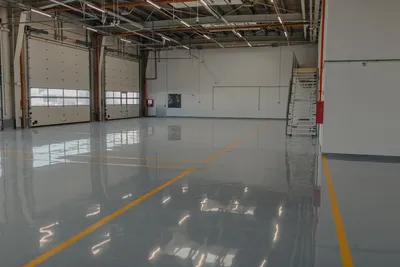
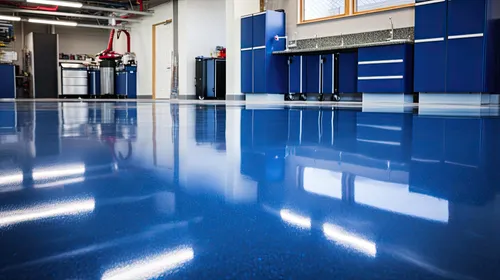
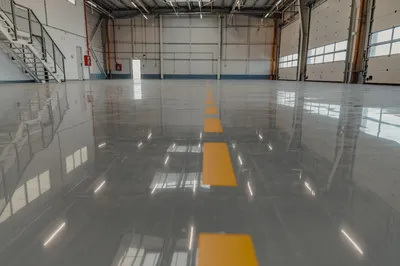
Warehouse Floor Coatings in Manville, NJ
Warehouse and distribution floors near Manville's Route 533 corridor and the former industrial areas of the borough deal with forklift traffic, pallet jacks, heavy racking loads, and the same elevated moisture conditions from the Raritan-Millstone water table that affect every slab in the area. We install warehouse floor systems here that are rated for the actual operating loads and prepped for the real moisture situation.
What We Evaluate for Warehouse Floor Coating
Industrial floors need systems matched to traffic, chemicals, and operations. We assess these during your free site visit.
Stand-up and sit-down forklifts, pallet jacks, and reach trucks all impose different loads. We ask about equipment types and traffic patterns. High-build epoxy, epoxy mortar, or urethane cement may be required. Thin coatings fail under heavy equipment.
Oil, grease, battery acid, cleaning agents, and process chemicals affect system selection. We identify what spills or drips on the floor and choose a coating that resists it. Urethane cement handles thermal shock and aggressive chemicals; epoxy mortar handles impact.
We can phase the work by section so part of the facility stays operational. We coordinate cure times, access, and equipment movement. Many warehouses coat in stages over several weeks. We discuss scheduling during the initial assessment.
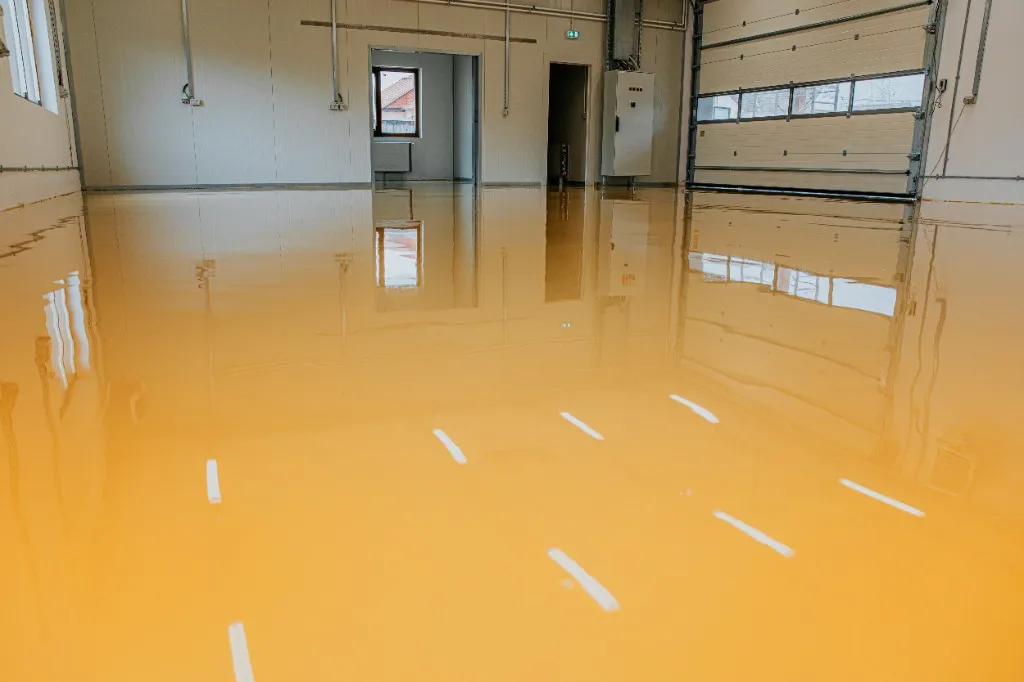
Yellow aisle lines, crosswalks, staging zones, and safety markings are common in warehouses. We can include line striping as part of the project. Colors and layouts are customized to your facility.
Cracks, spalling, and uneven surfaces need repair before coating. Epoxy mortar can fill and level; urethane cement handles thermal cycling. We assess damage and recommend the right approach. Severely deteriorated slabs may need more extensive repair first.
Warehouse floors in Manville
Warehouse slabs in the Manville area are typically 4 to 6 inches thick, but forklift and vehicle loads concentrate on small contact patches that create point stress far exceeding what residential or light commercial floors see. A warehouse coating system has to handle that mechanical abuse as its first design criteria.
The secondary criteria for Manville warehouse floors is moisture. Industrial slabs in low-lying areas near the Raritan and Millstone corridors carry the same elevated water table pressure as residential properties. Warehouses that experienced flooding during Ida or past storm events have the same surface damage and efflorescence conditions that residential slabs show. We test industrial slabs before specifying any system.
Epoxy mortar is the standard specification for warehouse floors that take consistent forklift and heavy pallet traffic. The aggregate-filled mortar build creates a thick, impact-resistant slab that does not crack under concentrated wheel loads the way thin-build coatings do. For areas with chemical exposure from maintenance activities, we specify compatible chemical-resistant topcoats over the mortar base.
Every project follows the same proven steps, from free estimate to final walkthrough.
Your floor backed for life. In Writing. If the coating bond ever fails, peels, or delaminates, we come back and make it right: materials and labor, at no cost to you.
What you get
Key Benefits
- Epoxy mortar system rated for forklift and heavy vehicle traffic
- Moisture vapor testing and mitigation primer for slabs near the river corridors
- Flood-related surface damage assessment and repair
- Joint and crack repair to prevent edge delamination under wheel loads
- Phased installation to keep warehouse operations running
Ideal For
Warehouses, distribution facilities, and storage operations in Manville near the Route 533 corridor and former industrial areas where floors take forklift traffic, heavy racking loads, and the moisture pressure of a low-elevation site.
What to Expect
We assess the slab, test for moisture, map the traffic and load zones, and provide a written scope with phased install timeline. Warehouse floors return to light traffic in 24 hours, full forklift loads in 72 hours after the final coat.
Warehouse Floor Coating FAQ - Manville
What thickness of epoxy mortar is needed for a forklift floor?
The standard specification for forklift-rated warehouse floors is 1/4 inch (approximately 6mm) of aggregate-filled epoxy mortar, which provides the impact resistance and compressive strength needed for consistent forklift use. For heavier loads - high-capacity forklifts, loaded pallet jacks on small wheels - we may specify a thicker build. We base the spec on your actual equipment and load weights during the assessment.
Our warehouse slab has flooded before. Does that affect the coating?
It affects the prep requirements, not the final result. Flood-affected warehouse slabs need the same treatment as residential ones: assessment of surface damage, efflorescence removal, moisture vapor testing, and vapor-mitigation primer where needed. Under forklift loads, inadequate prep fails faster than under residential foot traffic, so the assessment step is even more critical on industrial floors.
Get a quote for your Manville warehouse floor
We assess the slab, test for moisture, and give you a written scope with a phased install plan. Warehouse-rated systems for the Manville industrial corridor.
Call Us: (908) 916-3535