Food Processing Floor Coatings in Manville, NJ
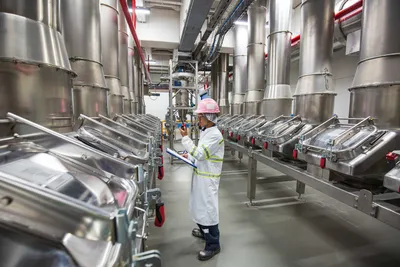
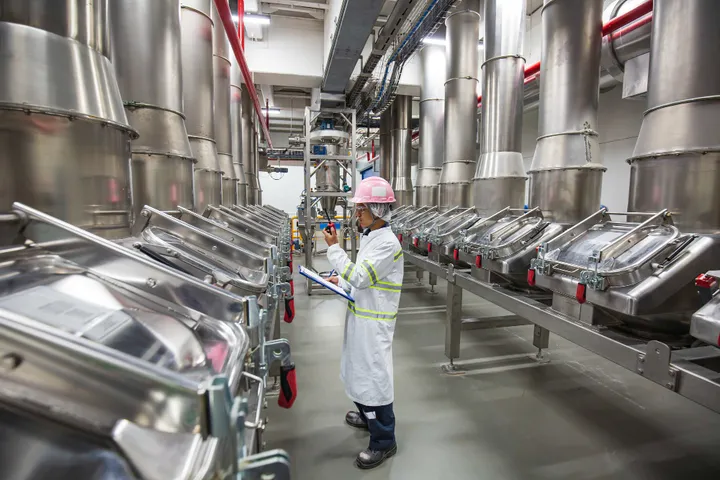
Food processing and food-adjacent industrial facilities in Manville need floors that meet FDA and USDA guidance on non-porous, cleanable surfaces, handle thermal shock from wash-down cycles, resist the acidic and caustic cleaning agents required for food-safety sanitation, and hold up under the mechanical loads of food production equipment. We install urethane cement systems for food processing environments throughout the borough.
What Food Processing Floors Demand
Compliance, sanitation, and safety requirements make food-processing floors the most demanding industrial category. We assess these during your site visit.
Third-party auditors check flooring as part of their assessment. Cracks, grout, and porous surfaces are findings. We install systems that meet USDA acceptance criteria and support SQF, BRC, and FSMA compliance. The system spec is documented for your audit file.
Hot water wash-down at 180°F hitting a cold slab, cold-storage transitions from 35°F to ambient, and steam cleaning create thermal cycling that cracks standard epoxy. Urethane cement handles the full range without delaminating.
Processing lines, wash-down areas, and packaging zones are wet continuously. We broadcast aluminum oxide or quartz for aggressive slip resistance and zone the texture by area. Dry storage gets less texture; processing lines get maximum traction.
The floor-to-wall joint is where water, product, and bacteria collect. Integral cove base eliminates the seam. Slope-to-drain ensures water flows to collection points and does not pond. Both are standard on every food-processing floor we install.
Peracetic acid, chlorinated alkaline cleaners, quaternary ammonium, and caustic wash solutions are common in food processing. Each has a different chemical profile. We match the flooring system to your actual CIP and sanitation chemicals.
Food processing floors in Manville
Food processing and food-adjacent manufacturing in Manville - including facilities that handle ingredients, packaging, or food-adjacent products - has stricter floor requirements than standard industrial spaces. The floor system must be non-porous to prevent contamination harboring, resistant to the cleaning and sanitation chemistry used in food environments, capable of handling repeated thermal shock from hot-water wash-downs, and durable under production equipment loads.
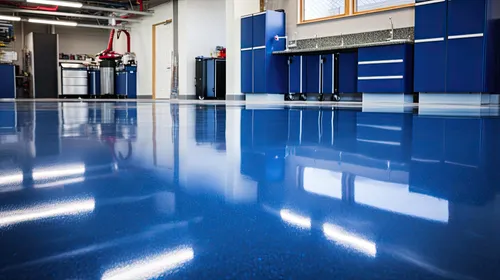
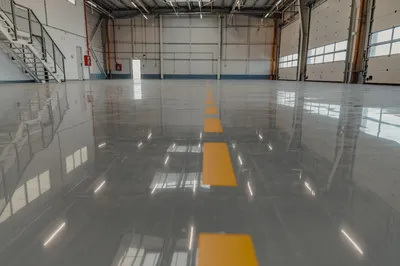
Urethane cement is the industry standard for food processing floors because it satisfies all of these requirements in a single system. It is seamless, non-porous, thermally stable across the full wash-down temperature range, and rated for the acids, alkalis, and disinfectants used in food-safety cleaning protocols. Unlike standard epoxy, it does not degrade or de-bond under thermal cycling from cold concrete to hot wash-down water.
For facilities in Manville near the river corridors, we also assess the slab for moisture conditions before specifying the system. Food processing slabs that have been in low-elevation areas of the borough carry the same groundwater pressure as other local industrial sites, and vapor mitigation is part of the primer specification when testing requires it.
Every project follows the same proven steps, from free estimate to final walkthrough.
Your floor backed for life. In Writing. If the coating bond ever fails, peels, or delaminates, we come back and make it right: materials and labor, at no cost to you.
What you get
Key Benefits
- Urethane cement system meeting food-processing hygiene and thermal requirements
- Seamless, non-porous surface for food-safe environments
- Thermal shock resistance for hot-water and steam wash-down cycles
- Resistance to acids, alkalis, and food-safety disinfectants
- Moisture vapor assessment for slabs near the river corridors
Ideal For
Food processing, food manufacturing, food packaging, and food-adjacent industrial facilities in Manville that need floors meeting food-safety surface requirements and capable of handling the physical and chemical demands of production environments.
What to Expect
We assess the facility, evaluate the slab conditions, and specify the system for your specific food processing environment. Installs are phased around your production schedule. Urethane cement returns to light foot traffic in 12 to 24 hours, full production loads in 48 to 72 hours.
Food Processing Floor FAQ - Manville
Why urethane cement instead of epoxy for food processing floors?
Standard epoxy becomes brittle when cycled between the cold temperatures of a refrigerated production floor and the hot water of a wash-down cycle. In food processing environments, that thermal cycling causes the epoxy to crack and eventually de-bond from the concrete. Urethane cement maintains its flexibility and bond across the full temperature range, which is why it is specified for food processing environments where wash-down is part of the daily routine.
Does the floor need to be drained during installation?
Existing floor drains are protected during grinding and coating to prevent material entry. We do not typically require special drainage during the install. For facilities where ongoing drainage is a design concern, we can integrate drain surrounds and transitions into the coved base installation for a seamless, cleanable detail at the drain.
Get a quote for your Manville food processing floor
We assess your facility and specify a urethane cement system that meets food-safety surface standards and handles your production schedule.
Call Us: (908) 916-3535