Manufacturing Floor Coatings in Manville, NJ
Manufacturing facilities in Manville deal with the full range of industrial floor demands: machine vibration, rolling loads, chemical and oil exposure, and slabs that may have moisture conditions from the Raritan-Millstone water table or a flood history from major storm events. We specify and install manufacturing floor systems based on what we actually find in the facility, not a generic industrial product applied over unaddressed conditions.
What We Evaluate for Factory Floor Coating
Every manufacturing environment has unique chemical, mechanical, and thermal demands. We assess these during your free site walk.
CNC machines, stamping presses, lathes, and assembly fixtures concentrate weight on legs and leveling pads. We calculate point-load pressure and select a system thickness and hardness that distributes force without cracking or denting. Thin coatings fail under static heavy loads.
Coolant, hydraulic fluid, cutting oil, solvents, and acids vary by operation. We identify what contacts your floor and match the chemistry. Epoxy resists most oils and mild acids. Aggressive solvents or concentrated acids may require novolac epoxy or urethane cement.
Welding sparks, heat-treat ovens, and hot parts placed on the slab create localized thermal stress. Standard epoxy softens above 140°F. We use systems rated for your actual thermal exposure and protect high-heat zones with appropriate materials.
Forklifts, AGVs, and tow motors create concentrated wear in travel lanes and turning areas. We build those zones thicker and apply harder topcoats. Line striping defines lanes and keeps equipment traffic predictable.
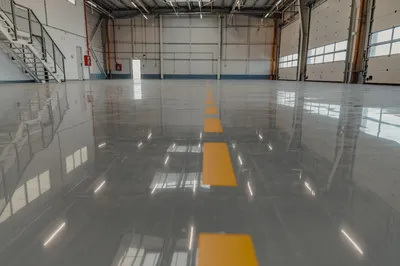
OSHA color standards for aisles, equipment zones, and hazard areas are common in manufacturing. We include line striping, color zones, and safety markings as part of the project. Layout is customized to your facility.
Manufacturing floors in Manville
Light manufacturing facilities near Manville's Route 533 corridor and former industrial zones have floor conditions shaped by decades of production activity: oil and chemical penetration into the surface concrete, worn traffic lanes where coatings have failed, joints and cracks opened by machine vibration and heavy loads, and in some cases the elevated moisture conditions of a low-elevation site near the river corridors.
The floor specification for manufacturing environments depends on the specific processes running in the facility. Chemical processing areas need systems with rated resistance to the specific chemicals used. High-traffic production lanes need epoxy mortar or thick-build systems that resist wheel and impact loads. Maintenance areas and service pits need chemical-resistant, easy-to-clean finishes. We map the facility during the assessment and specify the appropriate system for each zone rather than one product across the entire floor.
Installation is phased to work around production schedules. We work with your operations team to identify the sequence that minimizes downtime, plan the cure windows around your shift structure, and give you clear documentation of when each area is ready to return to production.
Every project follows the same proven steps, from free estimate to final walkthrough.
Your floor backed for life. In Writing. If the coating bond ever fails, peels, or delaminates, we come back and make it right: materials and labor, at no cost to you.
What you get
Key Benefits
- Zone-by-zone system specification matched to actual process demands
- Chemical surface decontamination for oil-contaminated concrete
- Epoxy mortar and high-build systems for production traffic areas
- Vapor-mitigation primer for slabs with moisture conditions
- Phased install planned around your production schedule
Ideal For
Light manufacturing facilities in Manville near the Route 533 corridor and former industrial areas where floors take machine loads, vehicle traffic, and chemical exposure in a low-elevation facility with potential moisture conditions.
What to Expect
We assess the facility, test the slab, map the production zones, and provide a written scope with phased install timeline. Most manufacturing floor projects phase over multiple weekends or nights. Return-to-production timelines are given by zone based on the specific system applied.
Manufacturing Floor FAQ - Manville
How do you handle a manufacturing floor that is contaminated with years of oil?
Oil contamination is the most common cause of coating failure on industrial floors because it prevents proper adhesion between the primer and the concrete surface. We mechanical-grind to remove the contaminated layer, apply chemical degreasers to address residual penetration, and run an adhesion test before the primer coat goes on. We do not skip this sequence on contaminated manufacturing floors.
Can you work around a two-shift manufacturing operation?
Yes, though it requires a detailed phasing plan developed before the job starts. We typically map the facility into sections based on your production layout, sequence the install to coat one section during the off-shift window while the others stay active, and rotate through the floor over multiple nights or weekends. We give you that plan in writing before the project begins.
Get a quote for your Manville manufacturing floor
We assess the facility, test the slab, and give you a written scope with a phased install plan built around your production schedule.
Call Us: (908) 916-3535