Auto Shop Floor Coatings in Manville, NJ
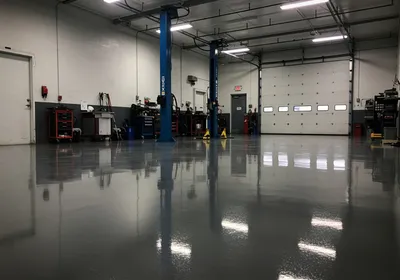
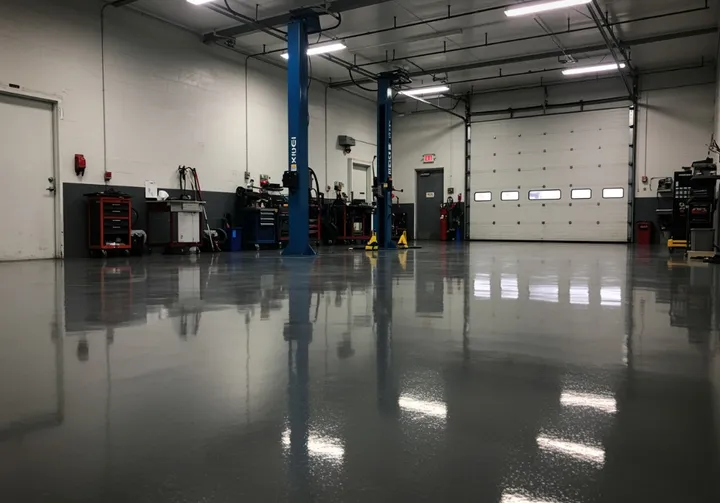
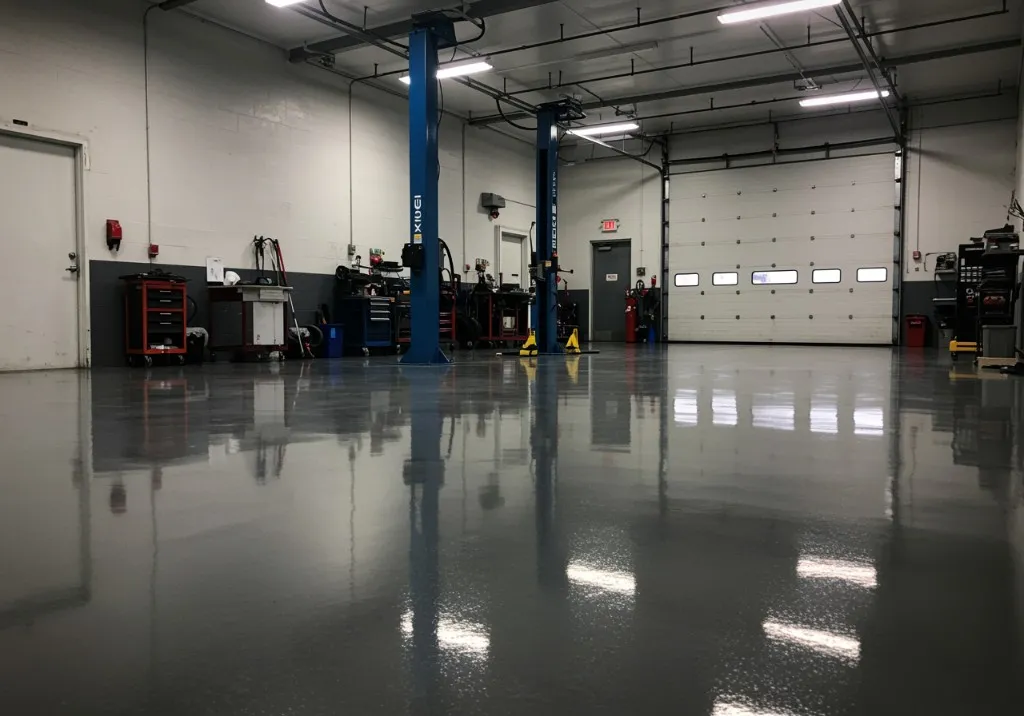
Auto service businesses along Route 533 in Manville are some of the most floor-demanding commercial environments in the borough: oil and hydraulic fluid soaking into bare concrete for years, hot tires transferring onto inadequate coatings, pressure-wash cycles creating repeated moisture exposure, and vehicle loads creating point stress on worn service bay floors. We install chemical-resistant epoxy systems for auto service environments that are prepped for what the concrete has actually been through.
What Auto Shop Floors Need Before Coating
Auto shops have unique contamination and load conditions. We evaluate these during your free site visit.
Years of oil drips saturate concrete. Epoxy will not bond to oil-contaminated concrete. We degrease the surface, then diamond-grind past the contaminated layer to reach clean concrete. In severe cases we apply an oil-tolerant primer. This is the step that makes the difference between a floor that lasts and one that peels.
Two-post and four-post lifts concentrate vehicle weight plus the lift onto small pads. Jack stands and transmission jacks add more point load. We select a system hardness and thickness that distributes these forces without denting or cracking.
Motor oil, ATF, brake fluid, battery acid, coolant, carburetor cleaner, and parts-washer solvent all contact the floor. We match the chemical resistance to your actual fluids. Standard epoxy handles most; shops with aggressive solvents may need a specialty topcoat.
Vehicles driving in and out, rolling tool chests, and floor jacks create abrasion in traffic lanes. We apply a harder topcoat in drive lanes and bay entrances where wear concentrates.
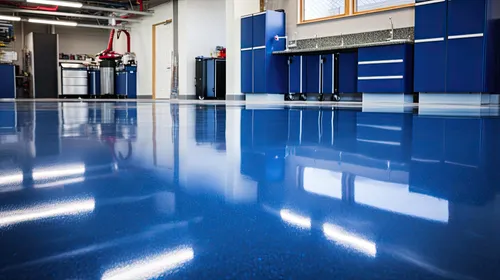
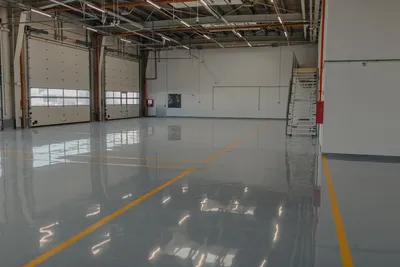
A coated floor lets you see fresh drips immediately, which means faster cleanup and less contamination. Spills sit on the surface instead of soaking in. This keeps the shop cleaner and reduces slip hazards.
Auto service floors on Route 533 in Manville
The Route 533 corridor through Manville has several auto service businesses - repair shops, tire shops, and quick-lube operations - where the floor has absorbed years of oil, transmission fluid, and brake fluid. Surface-contaminated concrete cannot bond to a coating primer without aggressive grinding and chemical treatment. A coating applied over oil-contaminated concrete fails quickly, usually delaminating in sheets within the first season.
Beyond contamination, auto service bay floors in Manville face the same moisture conditions as other slabs in the borough. Post-war-era shops built on slab near the Raritan-Millstone corridor may have elevated vapor pressure even after the contamination layer is removed. We test after grinding to confirm the moisture situation before specifying the primer and topcoat.
The standard system for auto service environments is a chemical-resistant epoxy mortar or broadcast system with a urethane or polyaspartic topcoat rated for hot tires, motor oil, and pressure washing. Drains are protected during installation. The finished floor is easy to clean, slip-resistant, and holds up under the daily vehicle traffic of an operating auto service business.
Every project follows the same proven steps, from free estimate to final walkthrough.
Your floor backed for life. In Writing. If the coating bond ever fails, peels, or delaminates, we come back and make it right: materials and labor, at no cost to you.
What you get
Key Benefits
- Oil and chemical surface decontamination before any primer goes on
- Moisture vapor testing after decontamination grinding
- Chemical-resistant system rated for motor oil, brake fluid, and automotive chemicals
- Hot-tire-rated topcoat that does not peel under daily vehicle loads
- Slip-resistant finish for technician safety in wet service environments
- Weekend or after-hours install to minimize business disruption
Ideal For
Auto repair shops, tire shops, quick-lube operations, and auto service businesses along Route 533 and throughout Manville where service bay floors have years of oil contamination, inadequate existing coatings, or bare concrete that has never been professionally protected.
What to Expect
We visit the shop, assess the slab and contamination level, and quote on site. Install typically happens over a weekend so the shop is open during the week. Service bays return to vehicle use within 24 to 72 hours of the final coat depending on the system.
Auto Shop Floor FAQ - Manville
How do you get the oil out of the concrete before coating?
The process is mechanical grinding first, chemical treatment second. We grind to a depth that removes the oil-saturated surface layer, then apply a chemical degreaser formulated for industrial concrete decontamination. After the degreaser dwell time, we test for residual contamination at the surface and repeat if needed. The adhesion test is the final confirmation that the concrete is clean enough for primer. We do not skip that test on auto service floors.
Can the shop stay open while the floor is being done?
In most cases yes, but it requires a phased approach. We coat one bay or section while the others stay operational, rotating through the shop over two or three nights or a weekend. The schedule depends on how many service bays you have and whether any areas can be sequenced without disrupting workflow. We plan the phasing with you during the site visit.
Will the floor hold up when vehicles drip oil on it?
Yes. Chemical-resistant epoxy and urethane topcoat systems do not absorb oil or other automotive fluids - they sit on the surface and clean up with a push broom or mop. The topcoat also resists hot-tire transfer and the concentrated loads from vehicle lift pads. The key is regular cleaning to prevent fluid buildup at the surface.
Get a quote for your Manville auto shop floor
We assess the contamination level, test the slab, and give you a written quote. Weekend installs for Route 533 auto service businesses.
Call Us: (908) 916-3535