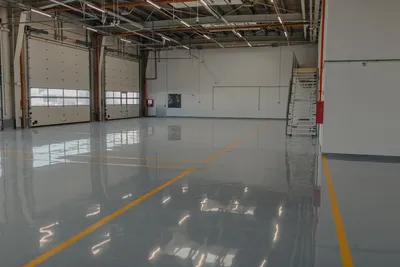
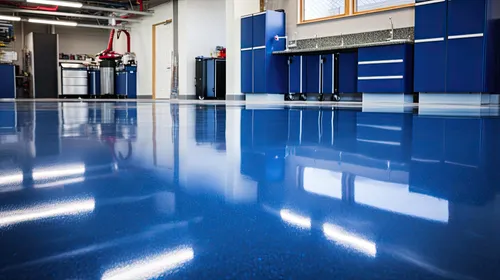
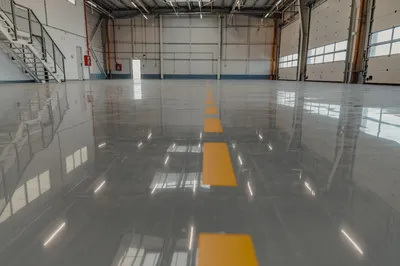
Warehouse Floor Coatings in Warren Township, NJ
Warehouse and distribution operations in Warren Township's Martinsville commercial zone need floor systems that can handle forklift traffic, pallet staging, and the daily mechanical demands of logistics operations without delaminating at control joints or blistering under wheel contact zones. The Martinsville valley floor slab conditions add the vapor pressure component that makes standard primer systems inadequate without vapor emission testing first. A warehouse floor that is peeling in the forklift aisles two years after installation is a sign that either the primer was applied to a slab that tested above its vapor threshold, or the system was not rated for forklift wheel loads - or both.
What We Evaluate for Warehouse Floor Coating
Industrial floors need systems matched to traffic, chemicals, and operations. We assess these during your free site visit.
Stand-up and sit-down forklifts, pallet jacks, and reach trucks all impose different loads. We ask about equipment types and traffic patterns. High-build epoxy, epoxy mortar, or urethane cement may be required. Thin coatings fail under heavy equipment.
Oil, grease, battery acid, cleaning agents, and process chemicals affect system selection. We identify what spills or drips on the floor and choose a coating that resists it. Urethane cement handles thermal shock and aggressive chemicals; epoxy mortar handles impact.
We can phase the work by section so part of the facility stays operational. We coordinate cure times, access, and equipment movement. Many warehouses coat in stages over several weeks. We discuss scheduling during the initial assessment.
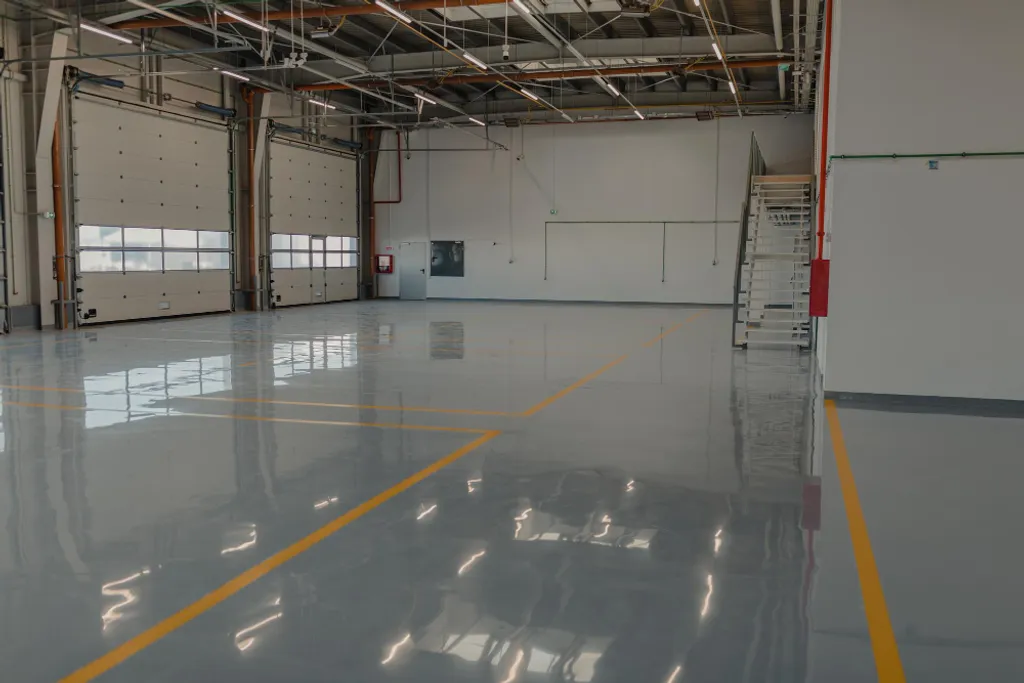
Yellow aisle lines, crosswalks, staging zones, and safety markings are common in warehouses. We can include line striping as part of the project. Colors and layouts are customized to your facility.
Cracks, spalling, and uneven surfaces need repair before coating. Epoxy mortar can fill and level; urethane cement handles thermal cycling. We assess damage and recommend the right approach. Severely deteriorated slabs may need more extensive repair first.
Warehouse floor systems in Warren Township facilities
Warehouse and distribution facilities in the Martinsville section of Warren Township sit on valley floor terrain where the soil profile is similar to the lower Somerset County industrial corridor. The clay-adjacent subgrade generates vapor pressure under concrete that, under forklift traffic loads, causes interfacial blistering between the coating and the primer significantly faster than under foot traffic alone. A warehouse floor that blisters in forklift aisles while the pedestrian areas look intact is showing this exact failure pattern.
Control joints in warehouse slabs are the other common failure point. When a forklift wheel crosses an unbridged control joint, the wheel load creates a shear stress at the coating edge on both sides of the joint. This peels the coating back from the joint progressively with each crossing. In active warehouse operations, a joint that is not properly bridged before coating can show significant delamination within months of installation. We treat every control joint and significant crack as a mandatory prep item in warehouse projects - not as an optional upgrade - and we select the joint filler type based on the expected movement and load pattern at each joint.
For larger Warren Township warehouse installations, phasing the project to maintain operational continuity is a standard part of how we plan the work. We divide the floor into zones based on racking layout, forklift aisle patterns, and staging areas, and we rotate through the zones with a coating-and-cure window for each. The zone-by-zone sequence is confirmed with your operations or facility manager before the project starts, and each zone gets a written return-to-load time before heavy equipment re-enters it.
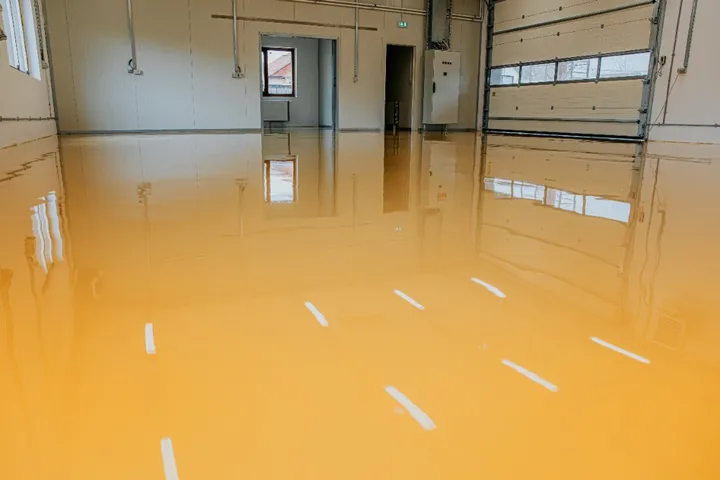
Every project follows the same proven steps, from free estimate to final walkthrough.
Your floor backed for life. In Writing. If the coating bond ever fails, peels, or delaminates, we come back and make it right: materials and labor, at no cost to you.
What you get
Key Benefits
- Moisture vapor emission testing before system specification on Martinsville valley floor warehouse slabs
- Vapor-mitigation primer when slab testing exceeds the coating threshold
- Epoxy mortar or high-build broadcast systems rated for forklift wheel loads in active aisles
- Control joint and crack fill as mandatory prep to prevent edge delamination under forklift traffic
- Phased installation by zone to maintain warehouse operations during the project
- Zone-by-zone return-to-load schedule provided in writing before the project starts
- Written scope with slab assessment, system specification, and installation timeline
Ideal For
Distribution centers, logistics operations, warehousing facilities, and third-party logistics operators in Warren Township's Martinsville commercial zone and throughout the Route 78 corridor. Especially relevant for facilities where a prior coating is delaminating in forklift aisles or at control joints, and for operations moving into an existing Martinsville warehouse building where the slab condition needs to be assessed before new equipment is brought in.
What to Expect
We visit and assess before quoting. Warehouse floor installs are phased by zone around your operations. Return-to-load times depend on the system and ambient temperature - we provide written zone-by-zone timelines. Projects involving significant vapor remediation or contamination removal may extend the prep phase, which we flag at the estimate stage.
Warehouse Floor Coating FAQ - Warren Township
Our Warren warehouse floor is peeling in the forklift aisles but looks fine in the pedestrian and rack areas. What is the difference?
The forklift aisle delamination pattern is the classic presentation of either vapor pressure blistering under cyclic forklift wheel loads, or a system that was not rated for forklift wheel contact stress. Forklift solid rubber tires concentrate load over a small contact patch, creating cyclic stress at the coating-to-primer interface that is much higher than foot traffic. If the primer was applied to a slab testing above its vapor threshold, the blistering starts at the highest-stress locations first - which is the forklift wheel paths. We strip the delaminating sections, retest the vapor emission rate, and rebuild with the primer system the current slab reading requires. If the slab was not the issue, we specify a system with higher tensile bond strength for the forklift zone.
Can you phase a Martinsville warehouse project without us shutting down operations?
Yes. We divide the warehouse floor into zones aligned with your racking and aisle layout, and we coordinate the coating and cure schedule for each zone with your operations team. A well-phased warehouse project moves through the facility without requiring you to shut down receiving, shipping, or inventory movement entirely. We build the phasing plan during the site assessment, confirm it with your facility manager, and provide written return-to-load times for each zone so the operations team can plan equipment re-entry.
What is the minimum system you would specify for a Warren distribution center with active forklift traffic?
For active forklift aisles and staging areas, the minimum system we specify is a high-build broadcast epoxy with a reinforced topcoat, applied over a primer matched to the actual vapor emission reading. For forklift operations with heavier load classes or facilities with significant dock and staging activity, epoxy mortar at a quarter-inch or greater build provides the tensile bond strength and surface hardness that standard broadcast systems cannot match under sustained heavy wheel loads. We confirm the appropriate specification during the facility assessment based on the actual forklift class and traffic pattern.
Get a quote for your Warren warehouse floor
We assess the slab, map the forklift zones, and design a phased install that keeps your Martinsville distribution operation running. Written scope and zone timeline before work begins.
Call Us: (908) 916-3535