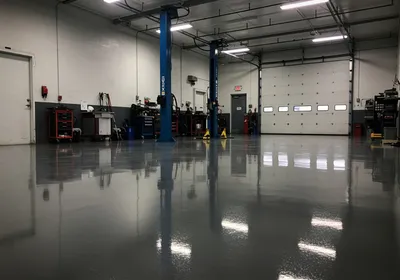
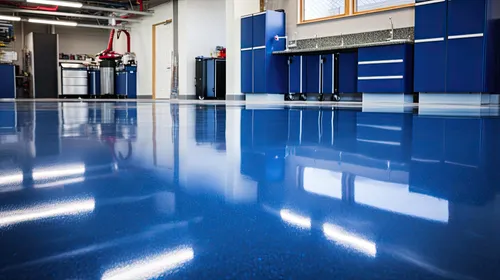
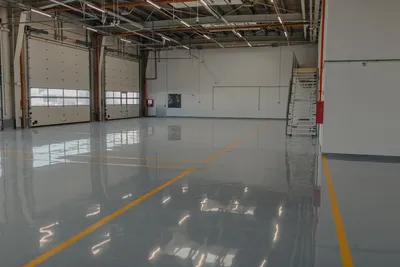
Auto Shop Floor Coatings in Warren Township, NJ
Auto service shops in Warren Township's commercial zones deal with the most contaminated concrete floors in the industrial category. Motor oil, transmission fluid, coolant, brake fluid, and solvents absorb into the surface concrete over years of uncoated or inadequately coated service floor use. That contamination does not just sit on the surface - it penetrates the top layer of the concrete pore structure and creates a bond-inhibiting barrier that prevents primer adhesion regardless of what product goes on top of it. Coating over oil-contaminated concrete is the single most common reason auto shop floors fail within months of installation.
What Auto Shop Floors Need Before Coating
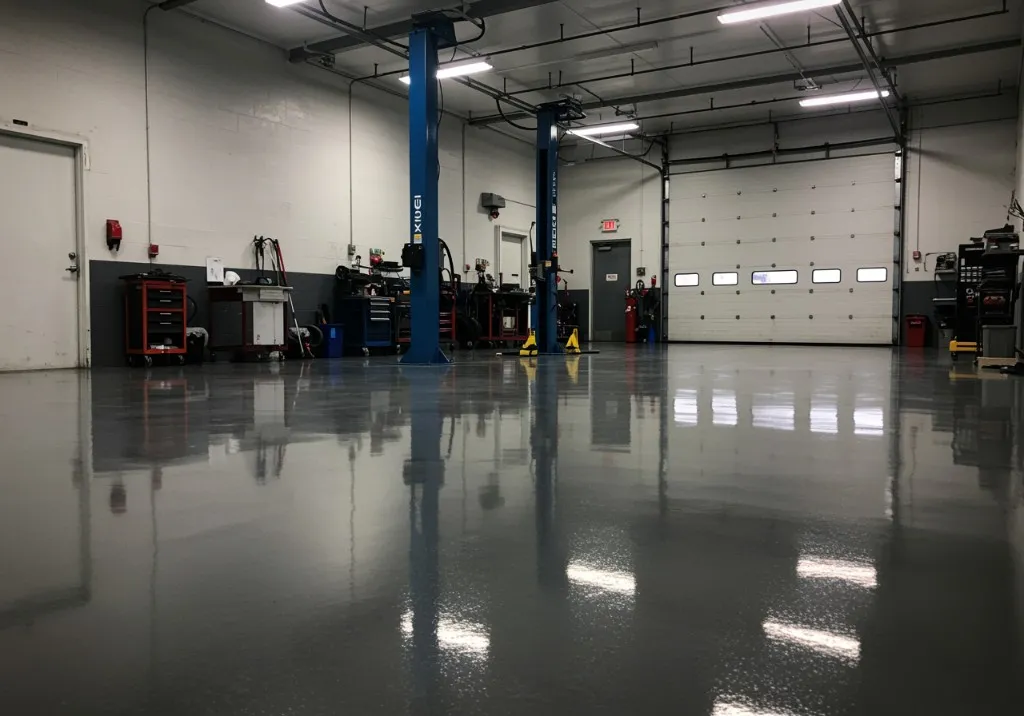
Auto shops have unique contamination and load conditions. We evaluate these during your free site visit.
Years of oil drips saturate concrete. Epoxy will not bond to oil-contaminated concrete. We degrease the surface, then diamond-grind past the contaminated layer to reach clean concrete. In severe cases we apply an oil-tolerant primer. This is the step that makes the difference between a floor that lasts and one that peels.
Two-post and four-post lifts concentrate vehicle weight plus the lift onto small pads. Jack stands and transmission jacks add more point load. We select a system hardness and thickness that distributes these forces without denting or cracking.
Motor oil, ATF, brake fluid, battery acid, coolant, carburetor cleaner, and parts-washer solvent all contact the floor. We match the chemical resistance to your actual fluids. Standard epoxy handles most; shops with aggressive solvents may need a specialty topcoat.
Vehicles driving in and out, rolling tool chests, and floor jacks create abrasion in traffic lanes. We apply a harder topcoat in drive lanes and bay entrances where wear concentrates.
A coated floor lets you see fresh drips immediately, which means faster cleanup and less contamination. Spills sit on the surface instead of soaking in. This keeps the shop cleaner and reduces slip hazards.
Auto service floor prep and coating in Warren Township
The auto service and detail shops in Warren Township's commercial zones, primarily along the Route 78 corridor in Martinsville and in the township's scattered commercial locations, share a concrete condition that is distinct from other industrial floor categories: the combination of oil contamination in the slab surface with vapor pressure from the valley floor subgrade creates a two-layer prep problem that generic coating contractors consistently underestimate.
Oil contamination is not removed by grinding alone. Diamond grinding opens the concrete pores and removes surface contamination, but oil that has penetrated below the surface layer of the concrete remains in the pore structure after the grinding pass. When the primer is applied over that residual contamination, the bond interface is between the primer and the oil rather than the primer and the concrete. That bond fails under the combination of vehicle wheel loads and temperature cycling within the first operating season.
Our prep sequence for Warren auto service floors is: degrease with an alkaline penetrating degreaser before grinding, grind to the required surface profile, test for residual contamination with a water droplet absorption test, degrease again if the test indicates residual oil, grind again if the second degrease exposes fresh contamination, and then run a vapor emission test before primer selection. On heavily contaminated auto shop slabs - multiple years of uncoated or failed-coat service floor use - this sequence can take a full day of prep before any coating material goes on. That prep day is the reason the floor holds for ten years instead of failing in one.
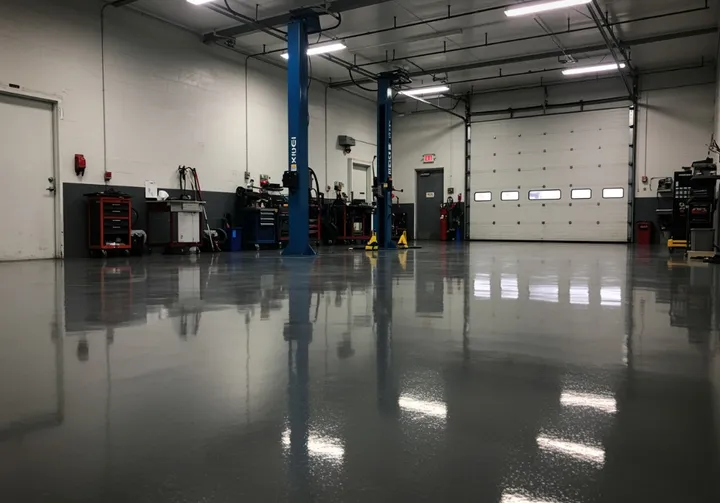
Every project follows the same proven steps, from free estimate to final walkthrough.
Your floor backed for life. In Writing. If the coating bond ever fails, peels, or delaminates, we come back and make it right: materials and labor, at no cost to you.
What you get
Key Benefits
- Alkaline penetrating degreaser applied before and after grinding to remove sub-surface oil contamination
- Residual contamination testing before primer application
- Moisture vapor emission testing before primer selection on valley floor Martinsville zone slabs
- High-build epoxy mortar or reinforced broadcast system rated for vehicle wheel loads
- Control joint and crack fill as mandatory prep to prevent edge delamination under vehicle traffic
- Written scope with contamination assessment findings, system specification, and installation timeline
Ideal For
Auto repair shops, quick lube and oil change operations, detail shops, transmission and brake service facilities, and auto dealer service centers in Warren Township's commercial zones. Especially relevant for any Warren auto service floor where a prior coating failed within a season or two after application.
What to Expect
We visit the facility, assess the contamination extent and slab moisture, and quote based on what we find. Heavily contaminated shop floors may require two prep days before coating. We flag this during the assessment and include the full prep scope in the quote. Most Warren auto shop floor projects complete in two to three days total.
Auto Shop Floor Coating FAQ - Warren Township
We had a coating put on our Warren shop floor last year and it peeled off in the service bays within six months. Why?
In most cases, oil contamination in the concrete surface that was not fully removed before priming. When the primer bonds to residual oil rather than to clean concrete, the bond fails under vehicle wheel loads and temperature cycling. The other possibility, particularly in the Martinsville valley floor zone, is that vapor pressure from the clay-adjacent subgrade was not addressed with a vapor-mitigation primer. We assess both during the teardown: we strip the failed coating, check the delamination pattern for which failure mode occurred, degrease and grind to clean concrete, test the vapor emission level, and build the replacement system to address the actual cause.
How do you know when the oil contamination has been fully removed?
We use a water droplet absorption test on the cleaned and ground concrete surface. On a properly degreased, oil-free surface, a water droplet absorbs into the concrete within 30 seconds. On a surface with residual oil contamination, the water beads on the surface rather than absorbing. If the surface beads water after the grinding pass, we degrease again, allow the degreaser to dwell, and retest. We do not apply primer until the water absorption test confirms the surface is clean.
What system do you recommend for a heavy-use Warren auto service floor?
For service bays with consistent vehicle movement, lift areas with steel pad loads, and rolling tool chest traffic, we specify epoxy mortar at a minimum quarter-inch build for the high-load zones. For lighter-traffic service areas and wash bays, a high-build broadcast system with a reinforced topcoat provides the right balance of surface hardness and chemical resistance. We confirm the system specification during the assessment based on the actual load pattern in your facility.
Get a quote for your Warren auto shop floor
We assess the contamination, test the moisture, and give you a written scope. The prep is the job in an auto service environment - we do not skip it.
Call Us: (908) 916-3535