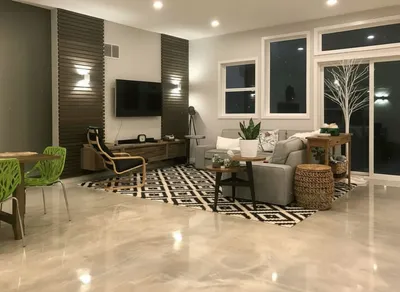
Interior Concrete Floors in Princeton, NJ
Princeton homeowners converting historic homes to open-plan living, building home studios for university faculty, or renovating carriage house interiors often want the original concrete slab visible and finished, not buried under tile or hardwood. We grind, polish, or coat interior concrete to fit how the space is actually being used.
What We Assess for Princeton Interior Floors
Interior residential slabs have specific conditions that determine what system will perform long term.
Slabs under tile or hardwood often have mastic adhesive, leveling compound, or thin-set that must be removed before any coating or polish. We assess the scope of removal during the estimate.
First-floor slabs on grade in Princeton homes built before the 1960s can push vapor just like basement slabs. We test even on main-level work.
For polished concrete or grind-and-seal, we assess what the aggregate looks like when the slab is ground. Old Princeton slabs sometimes have beautiful natural stone aggregate, sometimes plain gravel. We let you know what you are working with.
A dining room, a home studio, and a mudroom all have different durability requirements. We match the topcoat hardness and texture to the actual traffic the floor will see.
Some Princeton renovation projects include radiant heat systems embedded in the slab. We verify compatibility with the coating system before specifying.
Interior Concrete in Princeton Homes
Princeton's housing stock includes a range of concrete situations you do not encounter in most suburban markets. Carriage house conversions where the original stable floor has been built over with plywood. First-floor slabs in mid-century colonials that have been tiled twice and are now being stripped back to concrete for a renovation. Faculty housing with concrete utility rooms being opened into the main living floor. Each one is a different project and a different set of prep requirements.
Interior epoxy and polished concrete are popular for Princeton homeowners who want a durable, easy-care floor for main-level open plans, home studios, and utility-to-living conversions. The key variable is what the slab underneath is actually doing: age, moisture, surface condition, and any old adhesive or topping from previous floor coverings. We assess all of it before recommending a system.
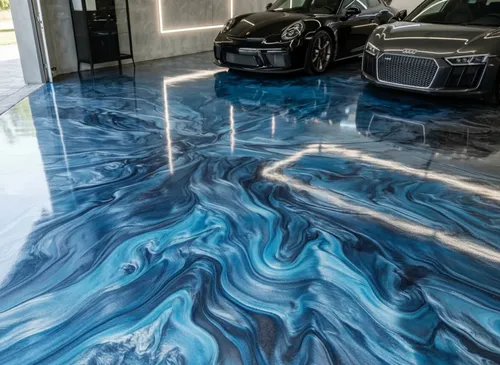
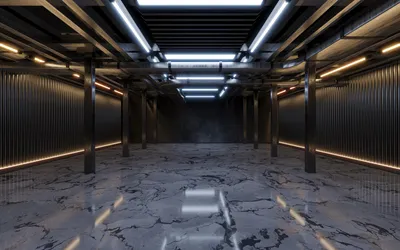
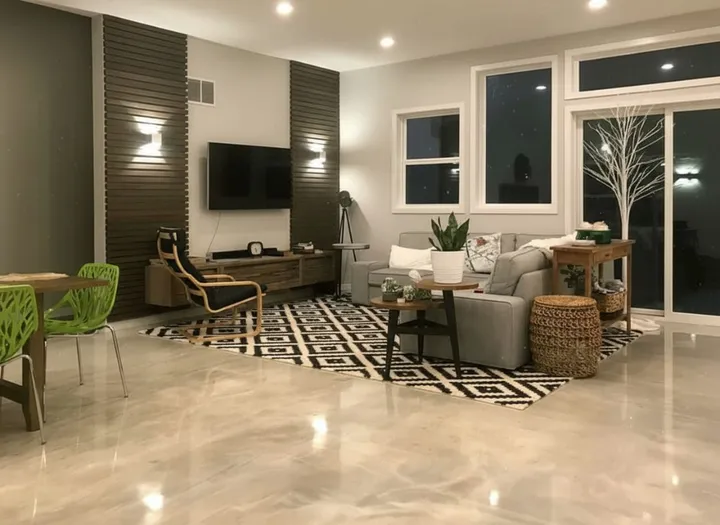
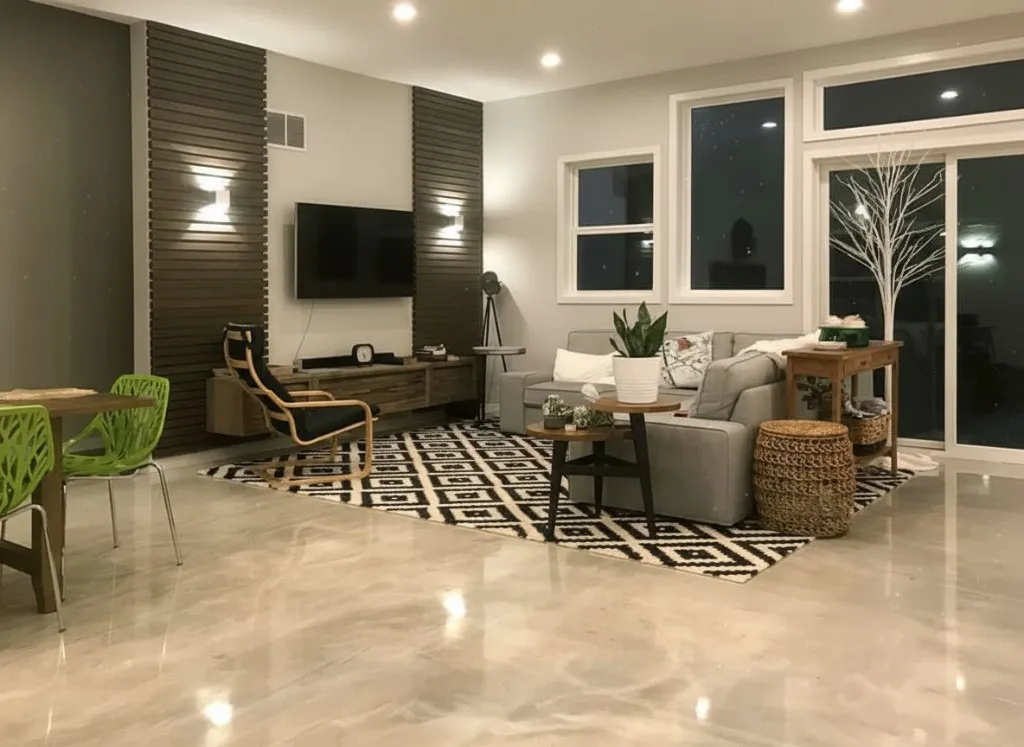
For homeowners who want the look of natural concrete, polished concrete and grind-and-seal systems expose the original slab surface and seal it without hiding the material. For main-level living areas where the floor needs to feel warm and finished, metallic epoxy and decorative systems offer a wide range of visual options.
Every project follows the same proven steps, from free estimate to final walkthrough.
Your floor backed for life. In Writing. If the coating bond ever fails, peels, or delaminates, we come back and make it right: materials and labor, at no cost to you.
What a Finished Interior Floor Does for a Princeton Home
Key Benefits
- Natural concrete or decorative finish options to match the renovation aesthetic
- Moisture testing on all main-level slabs, not just basement work
- Old adhesive, topping, and leveling compound removal included in scope
- System specified for actual traffic, from dining rooms to home studios
- Radiant heat compatible systems available
Ideal For
Princeton homeowners renovating historic homes with concrete subfloors, carriage house conversions to studio or office space, or main-level open-plan renovations where existing tile or hardwood is being removed to expose concrete.
What to Expect
We assess the slab, identify what prep work is needed to remove old floor coverings and adhesive, and give you a written quote with system options. Most interior projects take one to three days depending on the square footage and prep scope.
Princeton Interior Floor FAQ
I am removing tile from my Princeton home's first floor and exposing the concrete. What are my options?
Once the tile and adhesive are removed, we assess the slab and can offer polished concrete, grind-and-seal, epoxy, or metallic systems. The right choice depends on what the slab looks like underneath and how you plan to use the space.
Can you work over a slab that had radiant heat embedded?
Yes, but we verify the system specs and coating compatibility first. We work around the radiant loops and avoid any prep technique that would damage the tubing.
My carriage house has a historic wood floor over the original concrete. Can the concrete be finished and used as the main floor?
Possibly, depending on the condition of the original slab. We would assess it after the wood floor is removed and give you an honest evaluation of whether it is a good candidate for finishing.
What is the difference between polished concrete and epoxy for a living space?
Polished concrete exposes the natural slab material. Epoxy adds a colored or decorative layer over the concrete. Polished is more natural-looking; epoxy gives you more color and design options. We discuss both during the estimate.
How do interior coated floors handle area rugs and furniture?
Very well. Felt pads on furniture feet are recommended, and rugs can be placed anywhere. The topcoat is hard enough for rolling chair use as well.
Do interior epoxy floors feel cold underfoot?
Concrete holds temperature, so yes, in winter it can feel cool. Radiant heat solves this completely. Rugs help too. We discuss thermal comfort options when interior living space is the intended use.
Get a quote for your Princeton interior concrete floor
Tell us about your renovation project and we will assess the slab and give you a clear picture of your options.
Call Us: (908) 916-3535