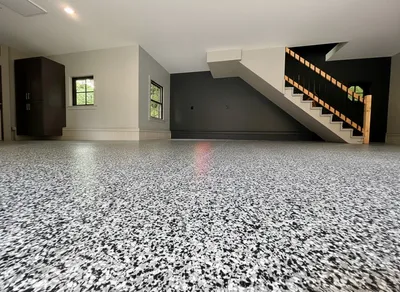
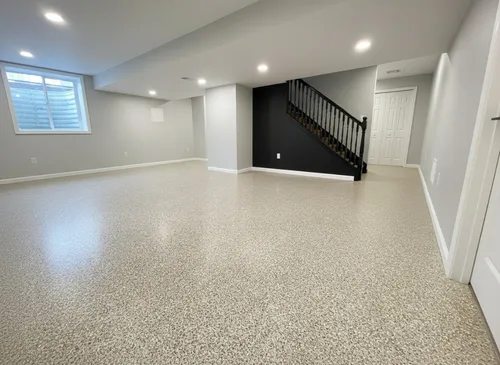
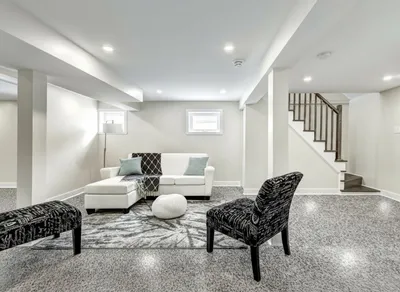
Basement Floor Coatings in Princeton, NJ
Princeton basements in Victorian, colonial, and Tudor-era homes are some of the most moisture-active slabs we work on. No vapor barrier, original poured concrete from the 1930s to 1950s, and decades of seasonal groundwater movement. A lot of these spaces are now being converted to home offices, gyms, and finished living areas. The moisture work comes first.
What Every Princeton Basement Assessment Includes
Old Princeton slabs need to be understood before any coating goes down. Here is what we evaluate.
We run a calcium chloride or in-situ RH test before proposing a system. If vapor is above the coating threshold, mitigation primer goes down first. No exceptions for Princeton basements built before 1960.
Many Princeton basements have been painted or sealed multiple times over decades. We identify delaminating layers during the assessment and grind them out completely before any new product is applied.
Older slabs have had decades to develop cracks and reflect frost heave and settlement. We map the crack pattern, fill with flexible polyurea, and note any areas with continuing movement that may need monitoring.
Some Princeton basement stairs and bulkhead entrances are tight. We assess equipment access and ventilation before the install day so there are no surprises.
A home office with rolling chairs needs a different topcoat hardness than a gym or a storage room. We ask about intended use and spec the system accordingly.
Princeton Basements and What They Need
The basement slab in a Princeton home built before 1955 is not the same as a modern construction slab. It was poured directly on grade with no membrane, often over fill that was not engineered, and in some cases directly over the original grade of a slope or low-lying area. Carnegie Lake and the Millstone River drainage area create a water table that seasonal groundwater reaches regularly. Homes within a few blocks of these areas can see significant moisture transmission through the slab in spring and after heavy rain.
We have coated basements in Western Section colonials where the moisture vapor emission was high enough that standard primers would have failed within a year. We use calcium chloride or relative humidity testing to put real numbers on what is happening in the slab. If the number is above the threshold for the coating system we want to use, we start with a mitigation primer that blocks vapor transmission before the epoxy goes down.
The other common issue in Princeton basements is the presence of old paint, sealer, and patch material applied over decades. Delaminating paint is a bond-breaker. We grind it out completely, get to clean concrete pore structure, and build the system from there. The finished floor lasts significantly longer because of it.
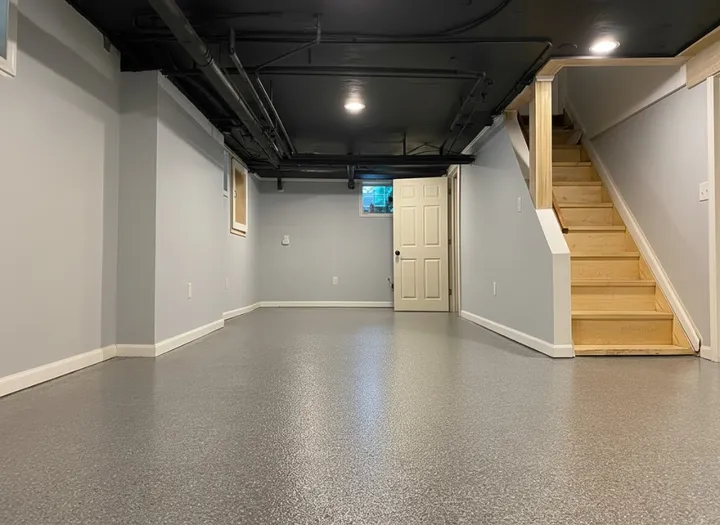
Every project follows the same proven steps, from free estimate to final walkthrough.
Your floor backed for life. In Writing. If the coating bond ever fails, peels, or delaminates, we come back and make it right: materials and labor, at no cost to you.
What a Properly Done Princeton Basement Floor Gives You
Key Benefits
- Moisture vapor mitigation primer for slabs pushing above threshold
- Old paint and failed patch material fully ground out before coating
- Crack repair with flexible polyurea as part of the prep scope
- System specified for actual use: home office, gym, storage, or living space
- Seamless surface that cleans easily and resists seasonal humidity
Ideal For
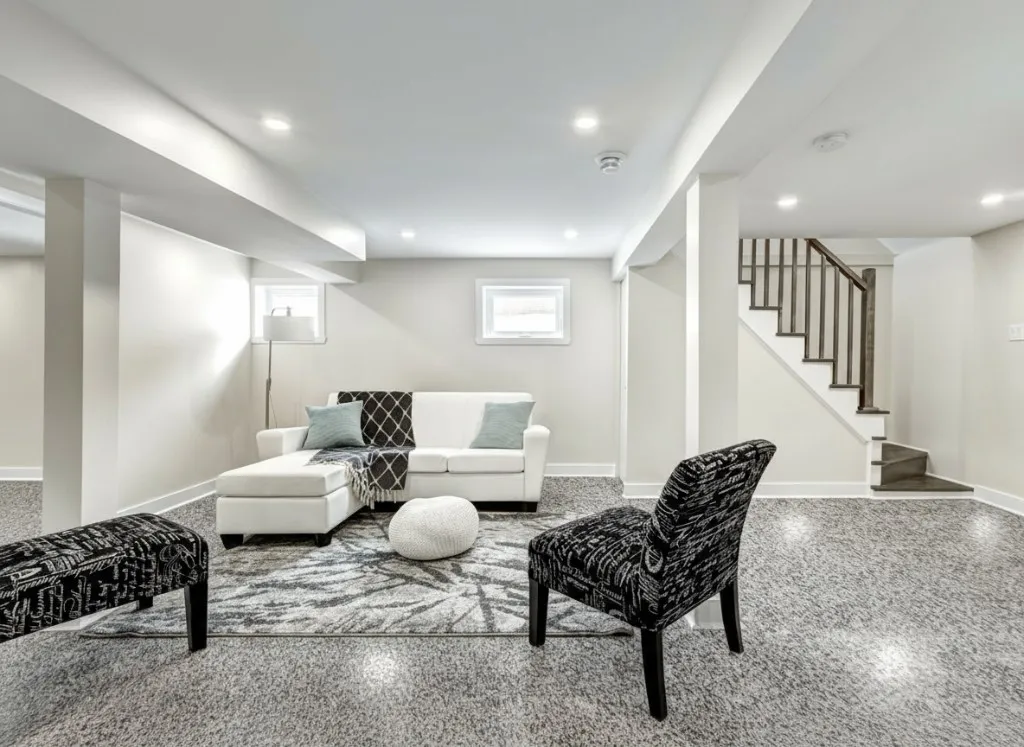
Princeton homeowners converting basement space to a home office, gym, or finished living area in a Victorian, colonial, or Tudor-era home with original concrete slab.
What to Expect
We visit, test moisture, map cracks, and provide a written quote. Most Princeton basement jobs take one to two days including crack repair. Light foot traffic the next day, furniture return within 48 to 72 hours.
Princeton Basement Floor FAQ
My Princeton basement has always had a slight musty smell. Can epoxy help?
A seamless coated floor removes a major moisture pathway, which helps. But if there is active water intrusion through the walls or drain tile failure, we address that separately. We are honest about what flooring can and cannot fix.
What is the moisture test, and what does a high reading mean?
We use a calcium chloride or relative humidity probe to measure vapor transmission through the slab. A high reading means the slab is pushing more moisture than standard epoxy primers are rated for. We use a vapor-blocking primer when that happens, which costs more but makes the floor last.
Can you coat a basement slab that has been painted multiple times?
Yes. We grind out the old paint completely. If we leave it, the new coating bonds to the paint, not the concrete, and will fail the same way the paint eventually would.
We want to use the basement as a home office. What finish do you recommend?
A solid-color or subtle flake system with a hard polyaspartic or urethane topcoat is common for home offices. It resists chair wheels, cleans easily, and does not look industrial. We discuss options and bring samples.
How long will a basement epoxy floor last in a Princeton home?
Properly prepped and moisture-mitigated, 15 to 20 years is typical. In below-grade spaces, the mitigation step is what separates long-lasting floors from ones that peel in five years.
Do you do leveling work if the basement slab is uneven?
Yes. We can apply a self-leveling underlayment before the epoxy system for slabs with significant grade variation. We identify whether this is needed during the estimate.
Get a quote for your Princeton basement floor
Old basement slabs need to be assessed, not guessed at. We come out, test moisture, and give you a clear picture before you commit.
Call Us: (908) 916-3535