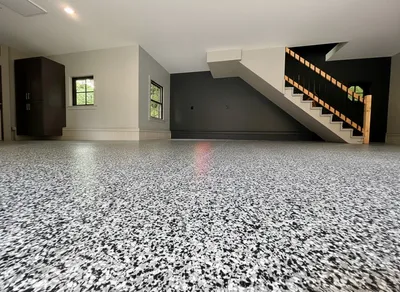
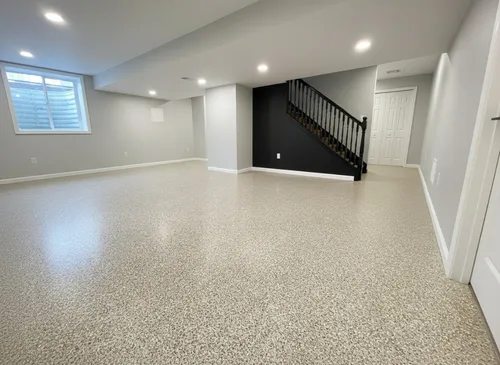
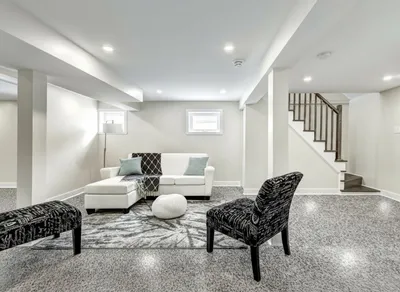
Basement Floor Epoxy in Piscataway, NJ
Post-war slabs, missing vapor barriers, and Middlesex County clay that holds groundwater against your walls. Piscataway basements feel damp even when they look dry. We run moisture tests, mitigate when data says so, and coat with below-grade systems that stop dust and simplify cleaning.
What Your Piscataway Basement Slab Needs Before Coating
Below-grade concrete here behaves differently than garage slabs. We check moisture, minerals, and cracks on every estimate.
Clay holds rainwater and releases it slowly against foundations. That steady pressure shows up as invisible vapor until a coating without primer blisters. Testing tells us whether a mitigation layer is mandatory or optional.
Slabs from mid-century Piscataway builds often have nothing between soil and concrete. We assume vapor risk until numbers prove otherwise and select primers accordingly.
Properties near the river lowlands can see higher seasonal water tables after wet months. We factor that history into system selection and discuss exterior drainage if we see active water paths.
Powder on the slab means moisture is moving salts through the concrete. We determine whether it is vapor-only staining or a sign of bigger water management needs before locking a schedule.
Flexible repair of moving cracks and sealed joints keep the finished floor smooth. Sealing also limits radon and soil gas routes through slab gaps, which pairs well with mitigation systems homeowners may already run.
Why Piscataway Basements Need More Than a Coat of Paint
Piscataway sits on the same clay-heavy Middlesex County soils that slow drainage across the Raritan River corridor and interior township lots. Homes built from the 1940s through the 1970s often have basement slabs poured without polyethylene under the concrete, which means vapor pushes upward year round. Walk-out and semi-below-grade layouts common near rolling sections of River Road and older split-level streets trap moisture on three sides, so musty air and efflorescence show up even when sump pumps run fine.
We calcium-chloride test or use in-situ RH probes on every Piscataway basement before recommending a build. When readings climb past safe thresholds, vapor mitigation primer goes down before color coats. Diamond grinding removes chalky mineral bloom and failed paint. A sealed epoxy field also cuts concrete dust migration into upper floors and can reduce radon entry through cracks and pores, which matters in parts of Middlesex County with documented bedrock chemistry.
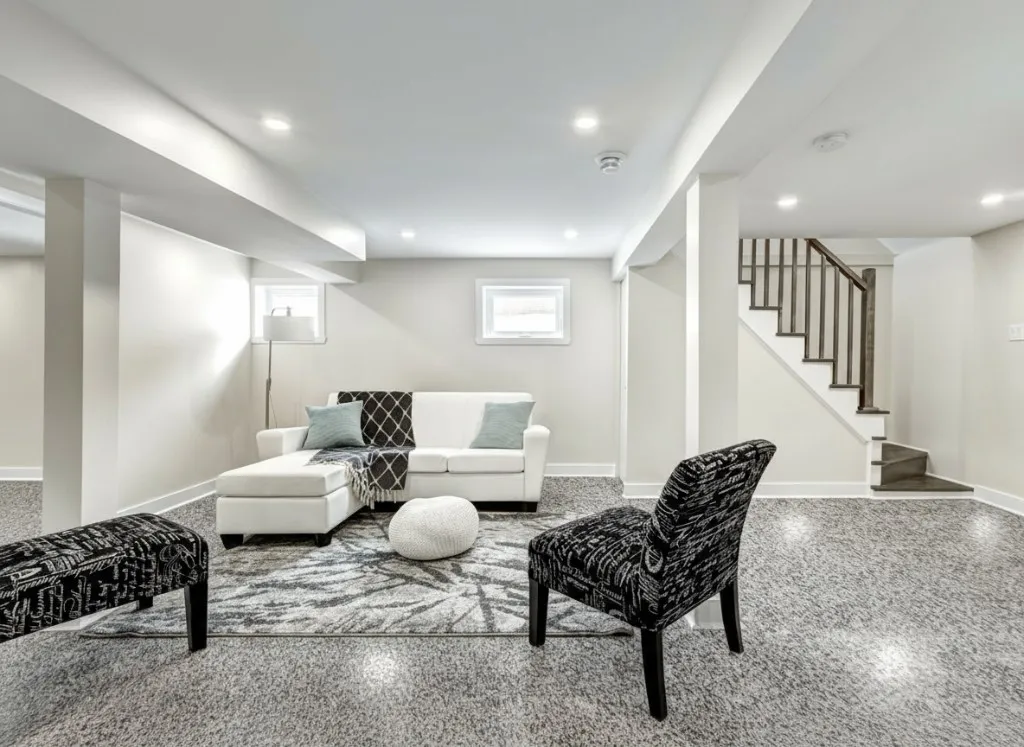
Finished basements are in demand for home gyms, playrooms, remote offices, and guest space, especially with Rutgers-area families needing quiet work zones. A coated floor costs far less than full build-outs yet delivers a washable, modern surface that lasts 10 to 20 years when the prep matches the science of your slab.
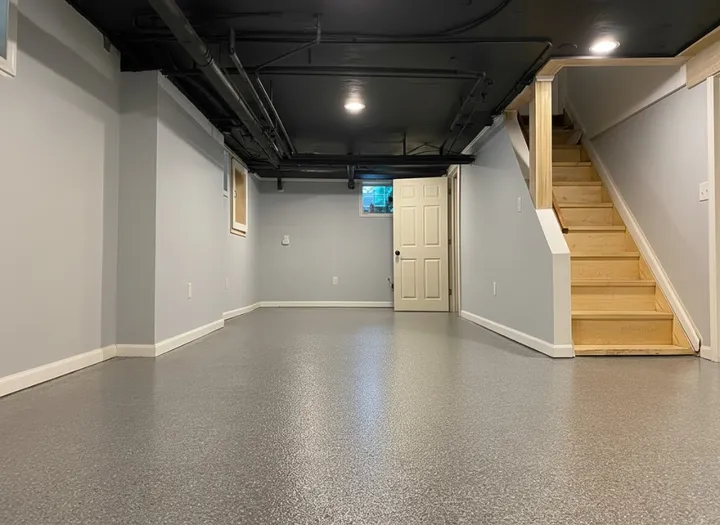
Every project follows the same proven steps, from free estimate to final walkthrough.
Your floor backed for life. In Writing. If the coating bond ever fails, peels, or delaminates, we come back and make it right: materials and labor, at no cost to you.
What a Coated Basement Floor Delivers
Key Benefits
- Sealed surface that stops concrete dust upstairs
- Moisture-smart builds with testing on every job
- Easy cleaning with soap and water, no wax cycles
- Flake, metallic, quartz, or grind-and-seal options
- 10 to 20+ year life when systems match the slab
- Faster refresh than full basement remodeling
Ideal For
Piscataway homeowners finishing rec rooms, gyms, offices, play areas, or storage zones, plus sellers who want a move-in-ready lower level without a six-week remodel.
What to Expect
Free estimate with moisture testing, written pricing before work, one- to three-day installs depending on size, and cure guidance for furniture based on humidity in your space.
Piscataway Basement Floor Epoxy FAQ
Can you coat a damp Piscataway basement?
Often yes after we quantify moisture. Active flooding or steady leaks need repair first. Elevated vapor alone can be handled with the right primer. We tell you which case you have before you commit.
Which finishes work best?
Decorative flake hides imperfections and adds grip for family spaces. Quartz suits gyms and laundry zones. Metallic works for media or game rooms. Grind-and-seal fits tight budgets on storage areas.
Why do basement coatings peel?
Moisture is the leading cause when installers skip testing and mitigation. Middlesex County clay pushes vapor constantly. DIY kits rarely account for that, so bubbles show up within months.
How long does basement epoxy last?
With correct primers and commercial materials, 10 to 20+ years is typical. Below grade is harder on coatings than garages, so we never treat it like an above-ground shortcut.
What does basement coating cost in Piscataway?
A 500 to 800 sq ft basement often ranges $2,500 to $6,000 depending on moisture work, repairs, and finish. Mitigation adds cost but prevents tear-out later.
Does epoxy help with dust and radon?
Sealing stops the fine concrete dust that rides upstairs on air currents. It also limits radon entry through cracks and pores, which supports broader mitigation strategies already in the home.
When can we move furniture back?
Light foot traffic usually starts the next day. Heavy pieces and gym gear typically wait 48 to 72 hours. Humid summer weeks in Piscataway can add a little cure time, and we note that on your job sheet.
Get a price for your Piscataway basement floor
We test the slab, explain vapor numbers in plain language, and quote Middlesex County basements from older ranches to newer walk-outs near campus.
Call Us: (908) 916-3535