Restaurant Kitchen Floor Coatings in Bernards Township, NJ
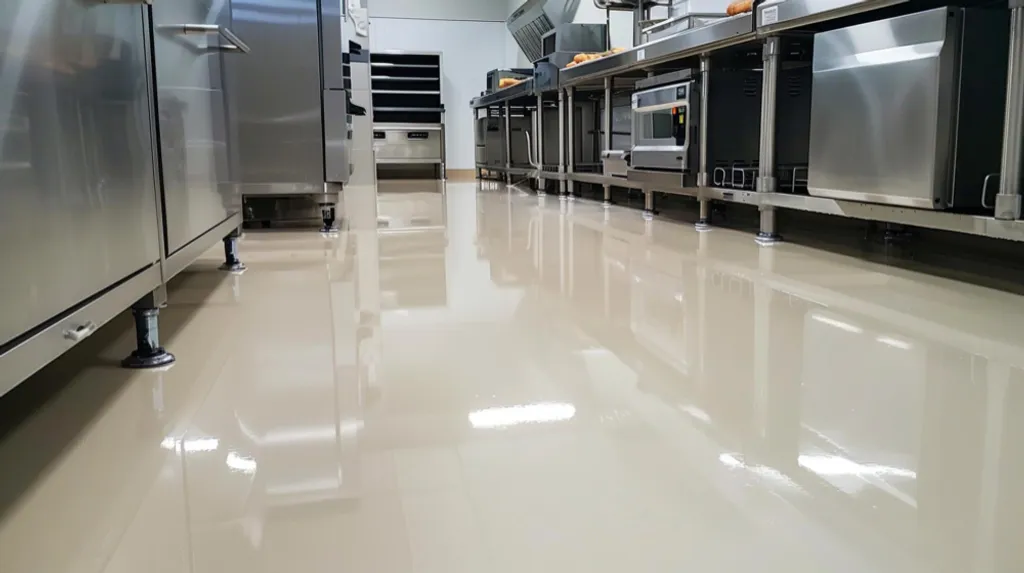
Restaurant kitchens near Basking Ridge Town Center and along Route 202 run on tight schedules and cannot afford a failed floor coating or a slippery surface. We install urethane cement and commercial-grade epoxy systems for food service environments, scheduled around your kitchen hours.
What Commercial Kitchen Floors Need
Food service floors in Bernards Township have regulatory, safety, and operational requirements that go beyond a standard commercial floor.
Commercial kitchen floors go from cold to hot water repeatedly. Standard epoxy cracks under rapid thermal cycling. We use urethane cement systems or thermally stable epoxy formulations rated for food service temperature ranges in Bernards Township kitchens.
Sanitizing chemicals, cooking fats, and acidic food products degrade standard epoxy topcoats over time. We specify topcoat chemistry that resists the specific cleaning agents and foods present in your kitchen. This is covered during the estimate.
Commercial kitchen floors under NJ food service and OSHA regulations require a defined slip coefficient in wet conditions. We broadcast non-slip aggregate as standard on all kitchen floors in Bernards Township. Finished surfaces meet applicable commercial kitchen slip requirements.
Most Basking Ridge and Route 202 restaurant kitchens cannot close for a full week. We design the install in phases, cover the dining room or front-of-house floor in a separate pass, and coordinate work windows around your kitchen prep schedule. We understand that 6 AM prep starts change what hours we can have the floor curing.
Commercial kitchen floors that meet the wall at a flat joint are a sanitation issue. We install integral cove base where required, sealing the floor-to-wall junction with the same system as the floor. This eliminates the gap where bacteria and debris accumulate.
Kitchen Floors Built for Food Service Environments
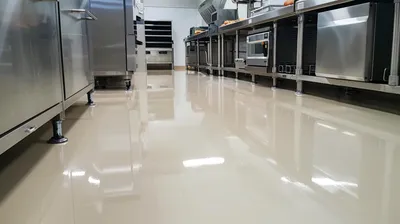
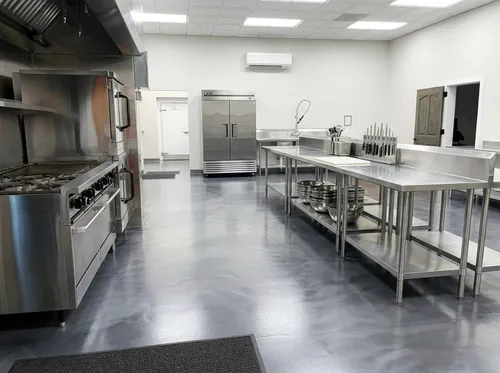
Restaurant kitchen floors in Bernards Township face a specific combination of demands: hot water, steam, cooking fats, heavy foot traffic, and repeated cleaning with harsh sanitizing chemicals. Standard residential or office epoxy systems are not built for this environment. They fail under thermal cycling, degrade under repeated chemical exposure, and become hazardously slick when wet. We use urethane cement and commercial-grade systems rated specifically for food service conditions.
Bernards Township dining ranges from casual and personal service to upscale establishments near the Somerset Hills. The kitchen operations serving this market run extended hours. We install kitchen floors in phases or overnight so the kitchen stays operational as much as possible during the project. We work around your prep start times and health inspection schedules.
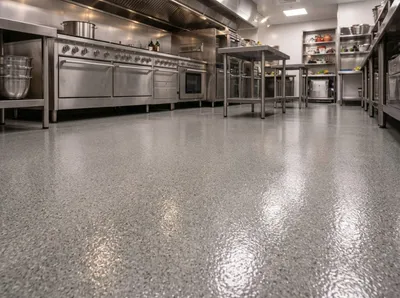
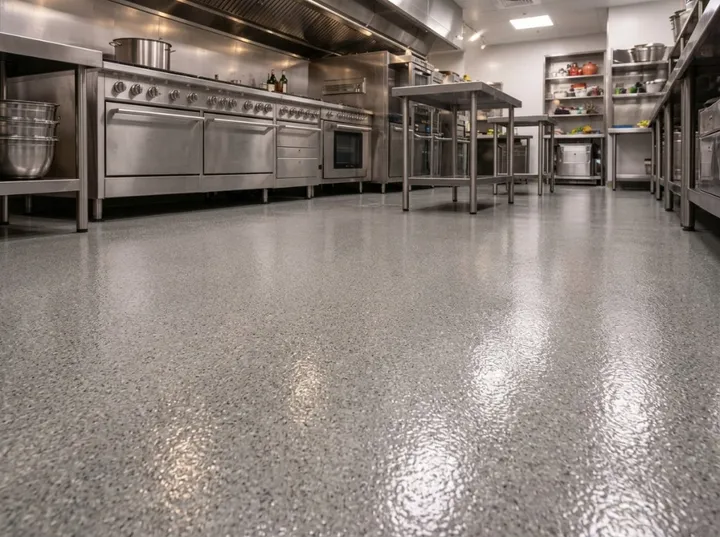
Slip resistance is not optional in a commercial kitchen. We add broadcast aggregate or texture to the topcoat on every kitchen floor. The slip coefficient meets NSF and commercial kitchen requirements. Your kitchen staff has a surface that grips, cleans quickly, and does not create a safety issue when hot water and fats hit the floor.
Every project follows the same proven steps, from free estimate to final walkthrough.
Your floor backed for life. In Writing. If the coating bond ever fails, peels, or delaminates, we come back and make it right: materials and labor, at no cost to you.
What Kitchen Floor Coatings Deliver
Key Benefits
- Urethane cement or thermally stable epoxy rated for kitchen temperature cycles
- Slip-resistant broadcast aggregate that meets commercial kitchen requirements
- Chemical and fat-resistant topcoat chemistry
- Integral cove base to seal the floor-to-wall junction
- Phased installation scheduled around your kitchen hours
- Seamless surface that sanitizes quickly with standard commercial cleaners
Ideal For
Restaurants, cafes, catering kitchens, and food service operations near Basking Ridge Town Center and along Route 202 that need a floor built for real commercial kitchen demands, not a cosmetic coating.
What to Expect
We visit your kitchen, assess the slab and existing floor conditions, review your operating hours and cleaning protocols, and provide a written scope. Installation is phased around your prep and service schedule. We do not work around a commercial kitchen without understanding exactly when and how you operate.
Restaurant Kitchen Floor FAQ
Can you install a kitchen floor without closing for a week?
Usually yes. We phase the kitchen floor in sections, working during your closed hours or overnight so one section is always curing while another is accessible. The exact schedule depends on your kitchen layout and operating hours. We plan this in detail during the estimate.
What is urethane cement and why is it better for kitchens?
Urethane cement is a flooring system that handles thermal shock from hot water cleaning, resists cooking fats and harsh sanitizers, and maintains slip resistance in wet conditions. Standard epoxy degrades under the combination of heat and fat that a commercial kitchen produces. Urethane cement is the appropriate specification for high-demand food service environments.
Does the finished floor meet health code requirements?
Yes. We install systems with slip coefficients that meet NJ commercial kitchen and food service requirements. Integral cove base eliminates the floor-to-wall sanitation gap. We can provide the product data sheets for your health inspector if needed.
Can you coat the dining room floor at the same time as the kitchen?
Yes. Dining areas use a different system than kitchens. We plan both as part of the same project with appropriate product selection for each zone. Coordinating both areas saves scheduling and prep costs compared to treating them as separate projects.
Get a quote for your kitchen floor
We visit your Bernards Township restaurant or food service space, assess the slab and your kitchen schedule, and provide a written estimate with an installation plan built around your operating hours.
Call Us: (908) 916-3535