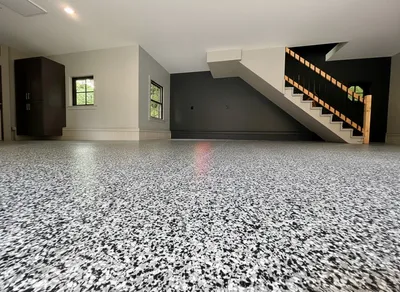
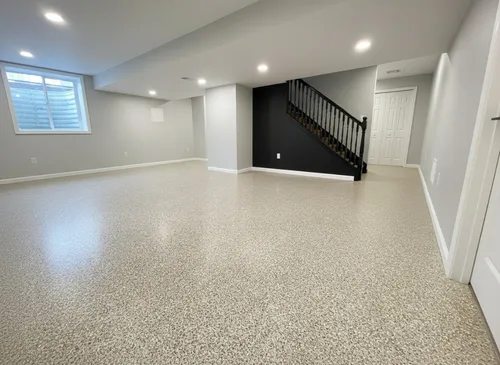
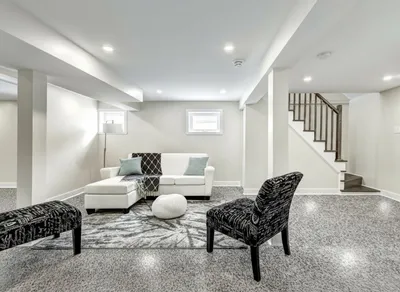
Basement Floor Epoxy in Somerville
Victorian stone foundations, Raritan River water table, and post-war slabs with no membrane. Somerville basements demand a moisture strategy before any coating goes on. We assess, test, mitigate, and then coat - in that order.
What basements are up against
Moisture is the defining issue. Here is what we find beneath Somerville homes.
The river has overflowed more than twenty times since 2000. Even in dry months, the water table near the floodplain keeps hydrostatic pressure elevated under basement slabs. We measure vapor emission rates with calcium-chloride tests and spec the primer system based on those numbers rather than guessing from season or weather.
Victorian-era foundations let water in through deteriorated mortar joints and porous stone. The slab edge stays wet for weeks after rain, and moisture can travel several feet inward across the floor. We address perimeter moisture paths, sometimes with a channel cut at the slab edge, before coating so the system does not trap water underneath.
Basements that have flooded carry mineral deposits, salt residue, and weakened surface concrete. The top layer may look solid but pulls up easily under grinding. We cut through the damaged layer, neutralize the salts, and treat the slab with a bonding primer before any coating goes on. This is especially common near the Raritan River floodplain.
Most Somerville basements built before 1980 have no membrane under the slab. Moisture vapor passes through the concrete continuously, not just during wet seasons. A calcium-chloride test tells us the emission rate, and if it exceeds the coating manufacturer's threshold, we apply a vapor-mitigation primer. We base that decision on measured data, not assumptions.
Somerville borough lots sit close together with narrow driveways and limited curb space. Basements are reached through tight stairways or bulkhead doors. Grinders, vacuums, and materials must be staged carefully. We survey access before quoting so there are no surprises on install day, and we keep all staging within the property line.
basement floors
Somerville basements tell two stories. In the older sections - West End, Borough Center - Victorian and early-1900s homes sit on stone or brick foundations with mortar that has been letting water in for decades. The slab, if there is one, was often poured as an afterthought over packed earth.
In post-war neighborhoods, capes and ranches have concrete basements that are better defined but still lack vapor barriers. The Raritan River and Peter's Brook elevate the water table seasonally, pushing moisture through these slabs with enough pressure to blister a standard coating. We test every basement, assess the foundation walls, and build a moisture plan before choosing the coating system.
Efflorescence, the white mineral powder that forms on foundation walls, is one of the most reliable signs of ongoing moisture movement. In the Borough Center and West End, we see it on nearly every Victorian-era basement job. It means water is traveling through the masonry, dissolving salts, and depositing them on the surface as it evaporates. We treat the walls and slab edge as a connected system because if the foundation is weeping, the floor coating plan must account for that moisture path.
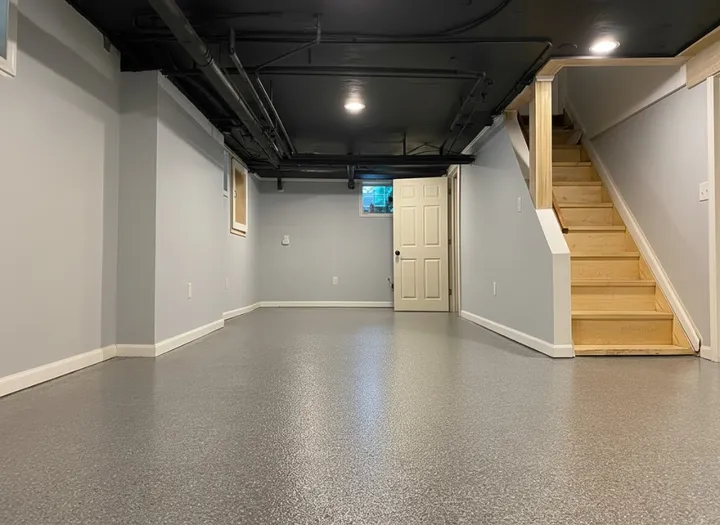
Every project follows the same proven steps, from free estimate to final walkthrough.
Your floor backed for life. In Writing. If the coating bond ever fails, peels, or delaminates, we come back and make it right: materials and labor, at no cost to you.
What you get
Key Benefits
- Moisture testing and foundation assessment before any work starts
- Vapor-mitigation primer when slab conditions require it
- Crack and joint repair for settling and flood-damaged concrete
- Sealed, finished floor that handles the Raritan River water table
- Options from utilitarian solid-color to decorative metallic
Ideal For
Somerville homeowners with basements that feel damp, show efflorescence, or have never been properly sealed. Especially relevant for Victorian-era and post-war homes near the Raritan River or Peter's Brook, including properties in the West End and Borough Center that sit on stone or brick foundations with decades of moisture history.
What to Expect
We assess the slab and foundation walls, run calcium-chloride moisture tests, and quote a system matched to your conditions. Install is typically one to two days depending on slab condition and the level of moisture mitigation required. The result is a sealed, dry-feeling floor that accounts for Somerville's high water table and your specific foundation type.
Basement Floor Epoxy FAQ
Can you coat a basement that floods seasonally?
Only if we address the water source first. If flooding is from hydrostatic pressure, a mitigation primer and drainage improvements may be enough. If water enters through foundation walls, that pathway must be sealed or redirected before we coat. We will not apply over an active problem because the coating will fail within months.
What about Victorian basements with uneven floors?
We grind to a consistent profile and use self-leveling primer or patching compound where the slab has settled or was poured unevenly. Many of the older basements in the West End and Borough Center have slabs that slope or dip near the perimeter. The finished floor will be smooth, level, and uniform.
How do you test for moisture?
We use calcium-chloride tests to measure moisture vapor emission rate over a 72-hour period. Results tell us whether a standard primer is sufficient or whether a vapor-mitigation system is required. We share the actual numbers with you and explain what they mean for your coating options and long-term performance.
What finish works best in a damp basement?
Solid color or grind-and-seal with a heavy vapor-mitigation primer underneath. Metallic is an option once moisture is controlled. Flake works well for utility basements where durability matters more than a decorative look. We walk through the options during the assessment so you choose based on your basement's conditions and how you plan to use the space.
What is the white powder on my basement walls?
That is efflorescence, mineral salts left behind as water evaporates through masonry. It is common in Somerville's Victorian-era stone and brick foundations, especially in the West End and Borough Center. The deposits themselves brush off, but their presence means water is actively moving through the wall. We factor that moisture pathway into the floor coating plan because slab-edge moisture often accompanies wall seepage.
Get a quote for your basement floor
Moisture testing, foundation assessment, and a coating system built for the Raritan River water table. Victorian basements and post-war slabs alike.
Call Us: (908) 916-3535