Food Processing Floor Coating in Somerville
Food-production facilities, commercial kitchens, and cold-storage areas need floors that meet USDA and FDA standards for hygiene, chemical resistance, and thermal shock. We install urethane-cement and high-build epoxy systems for Somerville food-processing environments.
What food-processing floors require
Food facilities have the most demanding floor requirements in any industry.
Hot wash-downs on cold slabs create rapid temperature changes that crack standard epoxy. Urethane-cement systems flex with the slab and resist thermal cycling. In Somerville facilities where cold storage sits adjacent to heated production areas, the temperature differential across the slab can be severe, making flexible systems essential.
Caustic and acidic sanitizers are used daily, sometimes multiple times per shift. The floor must resist these without softening, blistering, or losing adhesion. We verify the specific sanitizer products your facility uses and spec coating chemistry that handles those concentrations and contact times.
Seamless, non-porous surfaces with cove-base transitions at walls. No grout lines, no crevices where bacteria can harbor. We install to meet regulatory requirements and can provide spec sheets and compliance documentation for inspectors. For facilities undergoing certification or re-inspection, we coordinate with your timeline.
Water must move to drains without pooling. We verify slope before coating and build cove transitions so water does not collect at wall-floor junctions. In older Somerville buildings that were converted to food production, the original slab may not have adequate slope, and we correct this during prep.
Somerville sits near the Raritan River, and many borough-edge industrial buildings have elevated subsurface moisture. Vapor pushing through the slab can cause even urethane-cement systems to lose adhesion over time. We test for moisture-vapor emission rates before coating and apply vapor-mitigating primers when readings exceed the system's tolerance.
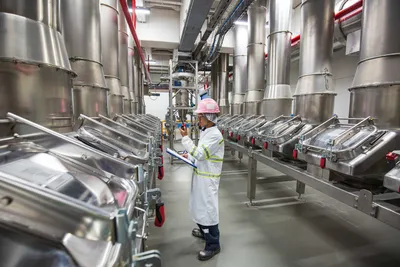
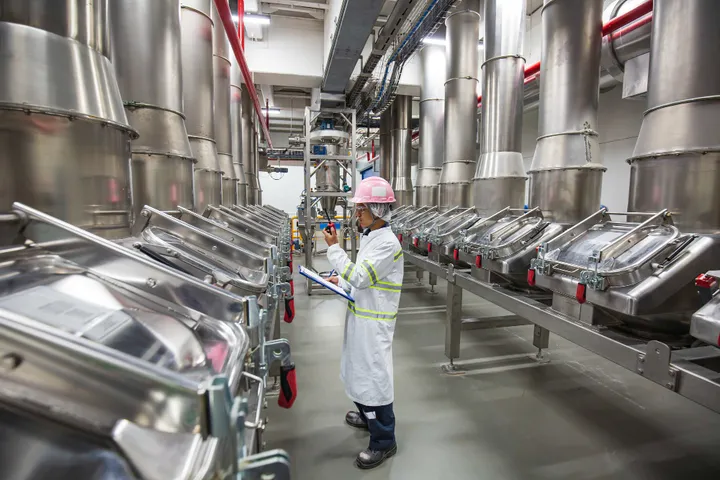
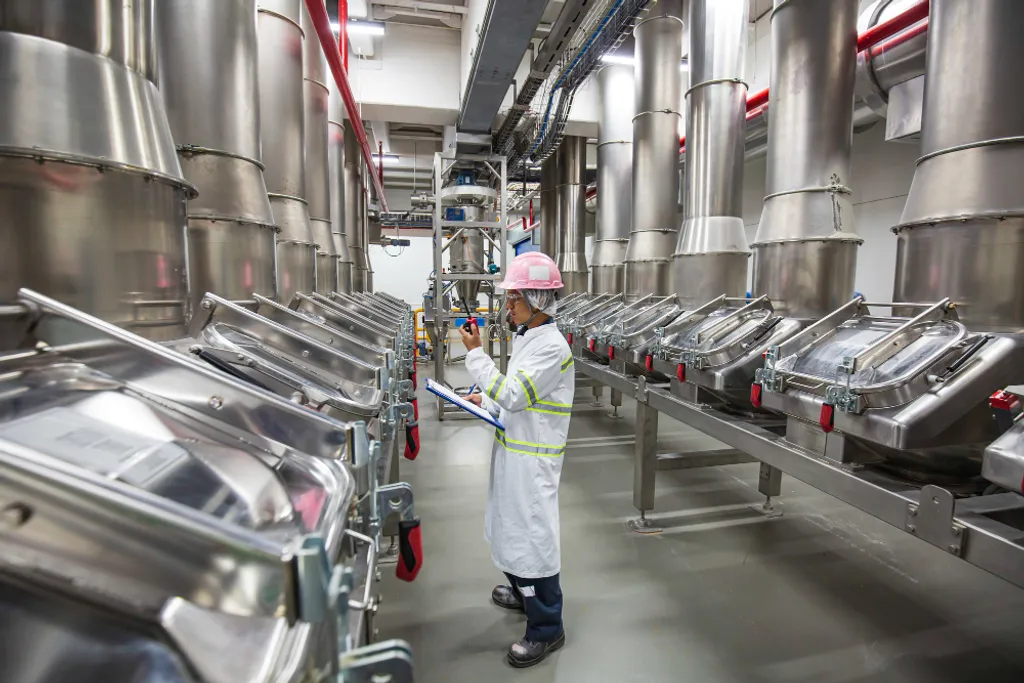
food-processing floors
Food-processing floors face the toughest combination of demands: thermal shock from hot wash-downs on cold slabs, aggressive chemical sanitizers, heavy rolling loads, and strict hygiene requirements. Standard epoxy cannot handle this. Urethane-cement systems are the industry standard because they flex with thermal cycling and resist the chemicals food facilities use daily.
We install these systems with proper drainage slope, cove-base transitions at walls, and surface texture calibrated for slip resistance on wet, greasy surfaces.
Somerville's food-processing tenants often operate in converted post-war buildings near the Route 202/206 corridor and Tannery Road area. These structures were not originally designed for food-grade requirements. Older slabs may lack proper drainage slope, have inadequate joint sealing, or show moisture-vapor issues from the high water table near the Raritan River. We address all of these structural deficiencies during installation so the finished floor meets regulatory standards regardless of the building's original purpose.
Every project follows the same proven steps, from free estimate to final walkthrough.
Your floor backed for life. In Writing. If the coating bond ever fails, peels, or delaminates, we come back and make it right: materials and labor, at no cost to you.
What you get
Key Benefits
- Urethane-cement system rated for thermal shock
- Chemical resistance for industrial sanitizers
- USDA/FDA-compliant seamless surface
- Cove-base wall transitions
- Slip-resistant texture for wet conditions
- Drainage slope verification and correction
- Moisture-vapor testing for high-water-table sites
Ideal For
Food-production, commercial-kitchen, and cold-storage facilities in Somerville that need a floor meeting USDA/FDA standards while handling thermal shock and chemical exposure. Especially relevant for converted post-war buildings near the Route 202/206 corridor and Tannery Road where drainage, slab condition, and subsurface moisture all need attention.
What to Expect
We assess the facility, review chemical exposure, drainage conditions, and moisture-vapor levels on the slab. From there we quote a urethane-cement or high-build system with phased scheduling around your production shifts. Cove-base transitions and drainage corrections are included in the scope. You receive spec documentation for regulatory compliance before work begins.
Food-Processing Floor Epoxy FAQ
Why urethane cement instead of standard epoxy?
Standard epoxy cracks under thermal shock: hot water on a cold slab. Urethane cement flexes with the slab and resists the rapid temperature changes food facilities create daily. It is also more chemically resistant to the sanitizers used in food production. For Somerville facilities with cold storage adjacent to heated areas, the flexibility is especially critical.
Does the floor meet USDA/FDA requirements?
Yes. Seamless, non-porous surface with cove-base transitions at walls. No grout lines or seams where bacteria can harbor. We can provide spec sheets and compliance documentation for inspectors. If your facility is preparing for certification or re-inspection, we coordinate timing and documentation with your compliance team.
Can you install without shutting down production?
We phase the work around your schedule. Zones are coated one at a time with clear handoff windows so production continues throughout the install. On tight Somerville borough lots, we plan material staging through alley access or adjacent areas so deliveries do not block your receiving dock.
What if our building was not originally built for food production?
Many Somerville food-processing tenants operate in converted post-war buildings that lack proper drainage slope, adequate joint sealing, or compliant wall-floor transitions. We correct these deficiencies as part of the installation: re-grading for drainage, filling and sealing joints, and building cove-base transitions. The finished floor meets regulatory standards regardless of the building's original purpose.
How do you handle moisture issues near the Raritan River?
The high water table near the Raritan River pushes moisture vapor through older slabs. We test emission rates before coating and apply vapor-mitigating primers when readings are elevated. This step is essential for long-term adhesion. Without it, even a well-installed urethane-cement system can blister or delaminate within months on a high-moisture slab.
Get a quote for your food-processing floor
Urethane-cement and high-build systems for food production. Thermal-shock resistant, USDA/FDA compliant, phased installs.
Call Us: (908) 916-3535